
BY PRASANNA PERERA
MARKETING AND MANAGEMENT CONSULTANT , CORPORATE TRAINER AND a SENIOR LECTURER
Many organisations claim to be customer-centric but often fail to truly listen to their customers, relying instead on data collection and reporting that create the illusion of understanding. Listening goes beyond gathering information; it requires genuine insight into customer needs and concerns. When internal comfort, legacy practices, and managerial ego are prioritised over honest customer feedback, listening becomes superficial.
In the Sri Lankan context, this overconfidence can lead brands to lose relevance, not through neglect but through the mistaken belief that measurement alone equates to understanding.
The Arrogance Of Past Success
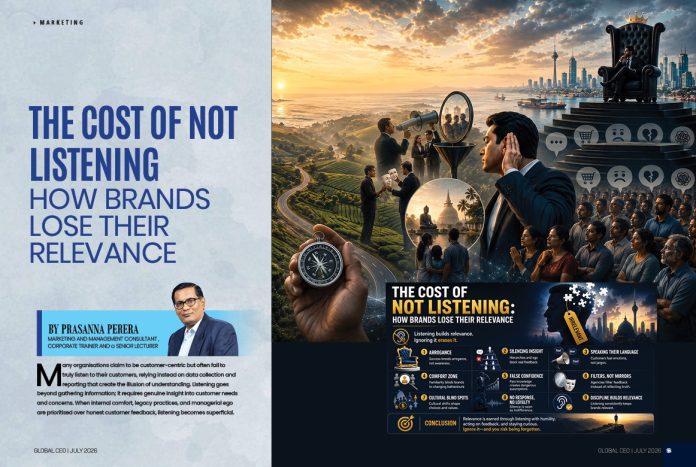
In Sri Lanka, many brands rest on decades of trust, mistaking legacy for safety. Market leadership often becomes a perceived entitlement, leading to complacency. When success breeds arrogance, companies tend to dismiss customer feedback as mere exceptions or temporary disruptions.
This mindset risks eroding relevance over time, as past achievements are wrongly used to justify ignoring warning signs. In a competitive landscape like Sri Lanka’s, sustained growth requires humility and attentiveness to evolving customer needs rather than complacency rooted in historical dominance.
The Silencing Effect Of Internal Hierarchies
The silencing effect of internal hierarchies often hampers genuine customer insights within traditional Sri Lankan organisations. While frontline employees may have direct contact with customers and understand their needs best, rigid layers of approval and internal protocols often prevent these insights from reaching decision-makers unaltered. As a result, valuable feedback becomes sanitised or lost in translation, leading brands to become disconnected from their audiences. Ultimately, it is not customer silence that undermines relevance but internal barriers that inhibit authentic listening and responsiveness.
Marketing That Listens Only To Its Own Language
Effective marketing requires genuine listening beyond industry jargon. Customers rarely articulate their experiences using marketing terminology; instead, they express emotions such as frustration, pride, fear, embarrassment, and the need for convenience. When brands focus solely on translating raw emotions into polished, jargon-laden language, they risk missing the deeper insights embedded within authentic, often messy narratives. In the Sri Lankan context, truly understanding and responding to these emotional truths is essential for building trust and meaningful connections with consumers.
The Comfort Trap Of Familiar Segments
The comfort of familiar customer segments can become a trap for brands, causing them to become overly attached to well-defined groups while overlooking emerging behaviours that do not fit established personas. Such an approach risks dismissing outliers and resisting change.
Genuine understanding requires openness to customers redefining themselves, even if it challenges existing segmentation strategies. In the Sri Lankan market, maintaining relevance demands marketers to continuously question traditional segment boundaries and embrace evolving consumer identities to stay connected and responsive.
The Dangerous Politeness Of Sri Lankan Consumers
In the Sri Lankan context, consumers often display a culturally ingrained politeness that leads them to remain silent rather than voicing dissatisfaction. This reserved demeanour can cause brands to mistakenly interpret politeness as contentment, resulting in underreported complaints and unnoticed discontent. To truly understand and serve Sri Lankan customers, brands must adopt a proactive approach to listening and interpreting subtle cues, recognising that silence does not equate to approval or satisfaction.
The Myth That Leaders Already Know The Market
Many senior leaders in Sri Lanka tend to believe that their experience grants them complete understanding of the market. This mindset often hampers active listening and adaptability, as reliance on past knowledge can hinder responsiveness to rapid market changes. In a dynamic economic environment, the most dangerous attitude is assuming familiarity equates to relevance. To stay competitive, leaders must prioritise curiosity over memory, embracing continuous learning and genuine engagement with emerging trends.
When Agencies Become Filters Instead Of Mirrors
When external agencies serve as filters rather than mirrors, they tend to soften critical customer truths to protect client relationships, risking the delivery of curated feedback instead of authentic insights. In the Sri Lankan context, this dynamic can hinder genuine understanding of consumer needs and perceptions. An effective approach involves rotating agency teams or commissioning anonymous insight audits, as impartiality enhances the quality of feedback. Genuine listening, free from the influence of contractual obligations, is essential for brands seeking meaningful connections with their audiences.
Listening To Cultural Shifts, Not Just Consumers
In Sri Lanka’s dynamic landscape, understanding cultural shifts is essential for brands aiming to remain relevant. Societal tensions, generational concerns, and economic uncertainties influence consumer behavior and broader societal values. Successful brands must listen attentively not only to their customers but also to the evolving cultural undercurrents. Ignoring these societal trends risks speaking out of time, regardless of product excellence, and may hinder meaningful engagement within the local context.
The Discipline Of Listening Without Responding
The discipline of listening without immediate response is essential for effective communication, particularly within the Sri Lankan context, where cultural differences influence interactions. Strategic listening involves exercising restraint and absorbing underlying patterns before reacting, rather than offering knee-jerk responses. This approach helps preserve brand integrity and fosters genuine understanding. While it may be uncomfortable, practising deliberate silence and reflection enhances clarity, enabling more thoughtful and impactful engagement in both personal and professional spheres.
Conclusion
When marketing ceases to listen, brands risk losing relevance not because customers change, but because organisations become complacent and stop being curious. This complacency leads to assumptions that obscure market realities, creating a form of blindness that can persist unnoticed—especially in Sri Lanka, where loyalty is often inherited and dissatisfaction is rarely expressed openly. Relevance must be continuously earned through attention and humility, as the greatest danger lies not in customer complaints but in their silence and disengagement over time.
