
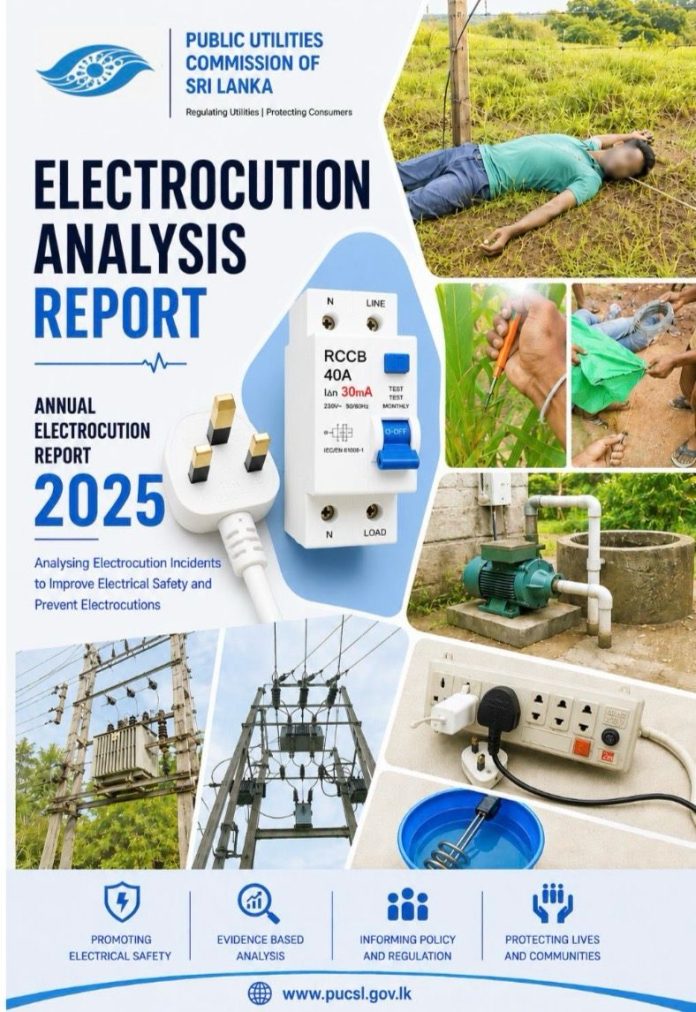
Sri Lanka recorded a significant decline in electrocution fatalities during 2025, with the Public Utilities Commission of Sri Lanka (PUCSL) reporting 91 deaths, representing an approximately 25% reduction compared with preceding years.
The PUCSL Annual Electrocution Report 2025 attributes the improvement partly to targeted regulatory, enforcement and public awareness initiatives addressing high-risk causes such as illegally tapped electric fences and malfunctioning or absent Residual Current Devices, including RCCBs.
Despite the improvement, Sri Lanka’s estimated electrocution fatality rate remains around 4.18 deaths per million people, considerably above the global best-practice benchmark of approximately one death per million.
The report identifies illegally tapped unsafe electric fences as a major concern, accounting for around 41% of fatalities, particularly in agricultural activities including crop protection and hunting. Around 40% of deaths were also associated with situations where properly functioning RCDs could have significantly reduced the likelihood of fatal outcomes.
Nearly 70% of victims were within the economically active 21–60 age group, with males forming a significant majority. The Eastern Province recorded the highest number of electrocutions in 2025, followed by the North Central and North-Western Provinces.
PUCSL has recommended stronger enforcement against illegal electric fences, periodic testing of RCDs, greater consumer awareness, safer electric fencing systems and targeted training in high-risk communities.
The regulator said continued data-driven interventions, improved electrical installations and public education would be essential to achieving further reductions and moving Sri Lanka closer to international safety standards.
