
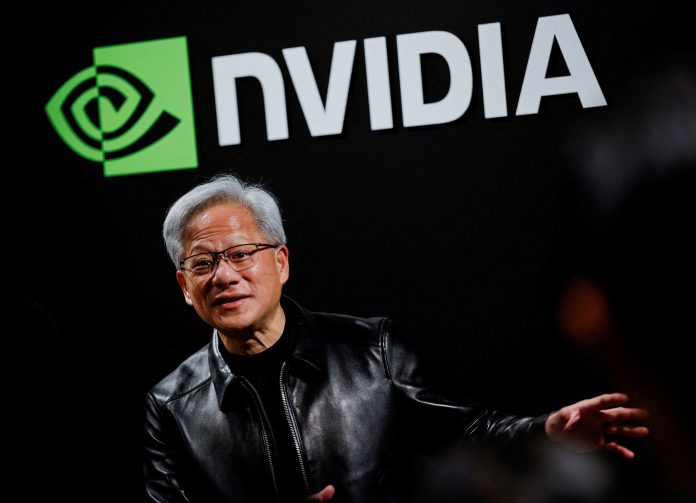
Nvidia co-founder Jensen Huang has resigned as Chief Executive Officer and President of the artificial intelligence chipmaker, ending more than three decades of leadership as a corporate controversy unsettles technology markets and raises questions about the future of the global AI boom.
The company confirmed his immediate departure on 12 November 2026, following reports concerning two extramarital relationships, including one involving a Chinese businesswoman whom US intelligence officials reportedly suspect of links to Beijing. China has rejected the espionage allegations. Nvidia has said it has no reason to believe its technology or national security was compromised, while an independent investigation continues.
Huang also stepped down from Nvidia’s board. Chief Financial Officer Colette Kress, who joined the company in 2013, has been appointed interim Chief Executive while directors consider internal and external candidates for a permanent successor. Long-serving director and former Synopsys Chief Executive Harvey Jones has become the company’s first board chairman.
The leadership shock sent Nvidia shares sharply lower, with the stock falling as much as 14 per cent during Thursday’s session before recovering some ground. Rival chipmakers Advanced Micro Devices and Broadcom gained as investors reassessed competitive prospects across the semiconductor industry.
Huang transformed Nvidia from a graphics processor specialist into a central supplier of computing infrastructure for generative AI, helping propel the company towards a market valuation approaching $6 trillion earlier this year. His departure therefore presents challenges extending beyond corporate succession.
Investors are particularly concerned about whether Nvidia can preserve the close coordination between chip development, software, cloud providers and AI laboratories that helped underpin its competitive advantage. Its technology roadmap remains important, but leadership continuity and execution have become immediate priorities.
The controversy also places renewed attention on Washington’s restrictions on advanced semiconductor exports to China. Huang had advocated maintaining access to the Chinese market and cultivated a close relationship with US President Donald Trump, while lawmakers have called for tighter scrutiny.
Kress has pledged to maintain Nvidia’s strategic direction, customer commitments and technological progress. With the company preparing to release quarterly financial results on 17 November, markets will closely assess whether its leadership transition can stabilise confidence in the wider AI sector.
