
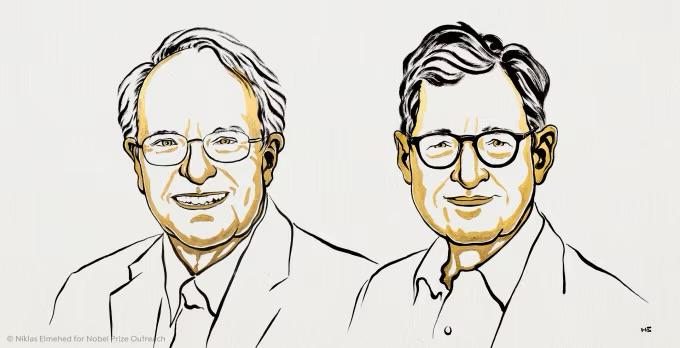
American economists Robert E. Hall and Michael Woodford have won the 2026 Nobel economics prize for research that has helped governments and central banks respond to economic shocks.
The Royal Swedish Academy of Sciences announced the award in Stockholm on 12 October, recognising their contributions to the microeconomic foundations of macroeconomic stabilisation. Hall is affiliated with Stanford University, while Woodford is based at Columbia University.
Their work connects the decisions of individual households and businesses with developments across the wider economy. It has helped build models that explain how monetary and fiscal policies influence economic fluctuations.
In practical terms, these models help policymakers assess how interest rates, government spending and taxation can reduce the severity of downturns and limit excessive economic expansion.
The research also highlights the importance of expectations. Consumers and companies make decisions based on what they anticipate will happen, as well as current conditions, making clear policy communication an important part of economic management.
John Hassler, chair of the Committee for the Prize in Economic Sciences, said their contributions provided the theoretical foundation for models used by central banks and governments worldwide. These tools help authorities address disruptions such as energy crises and sudden changes in household consumption.
Formally called the Sveriges Riksbank Prize in Economic Sciences in Memory of Alfred Nobel, the award carries 12 million Swedish kronor, approximately US$1.2 million.
Established by Sweden’s central bank in 1968 and first awarded in 1969, the economics prize is presented alongside the original Nobel awards on 10 December.
