
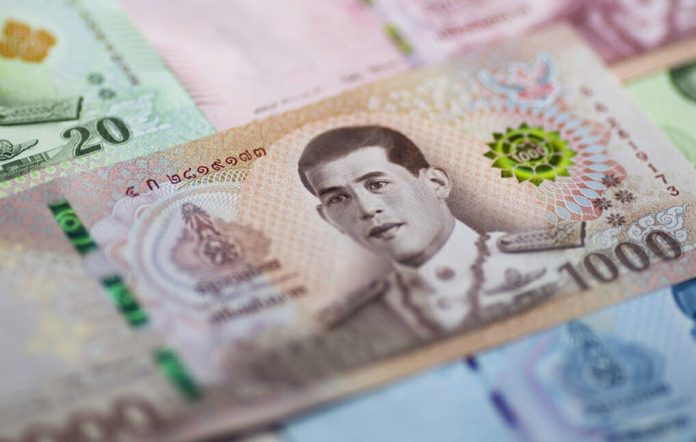
Thailand’s currency is expected to remain under pressure in the coming weeks as escalating geopolitical tensions in the Middle East continue to strengthen the US dollar and unsettle global financial markets.
Market analysts say the Thai baht is likely to weaken further after falling to its lowest level in more than a year, with investors seeking the relative safety of the US dollar amid growing uncertainty. Rising oil prices and renewed concerns over prolonged regional conflict have also added pressure on the currency, increasing the challenges for Thailand’s import dependent economy. (inkl.com)
According to the Bangkok Post, in a report by Wichit Chantanusornsiri, Krungthai Global Markets expects the baht to remain under depreciation pressure in the near term as geopolitical risks continue to intensify. The report noted that stronger demand for the US dollar, declining global gold prices and persistent concerns over the Middle East conflict have combined to weaken the Thai currency. (inkl.com)
Meanwhile, Bank of Thailand Governor Vitai Ratanakorn has indicated that while the central bank is closely monitoring developments, it is still too early to fully assess the long term economic impact of the conflict. He has suggested that a moderately weaker baht could provide some support for Thailand’s export and tourism sectors, although prolonged instability and higher energy prices remain significant risks. (nationthailand.com)
Economists warn that sustained geopolitical uncertainty could fuel inflationary pressures through higher fuel costs while increasing volatility across Asian financial markets. Businesses with exposure to international trade, tourism and energy imports are expected to remain particularly sensitive to further currency movements.
As global investors continue to monitor developments in the Middle East, the outlook for the baht will largely depend on geopolitical stability, oil price movements and the direction of US monetary policy.
