
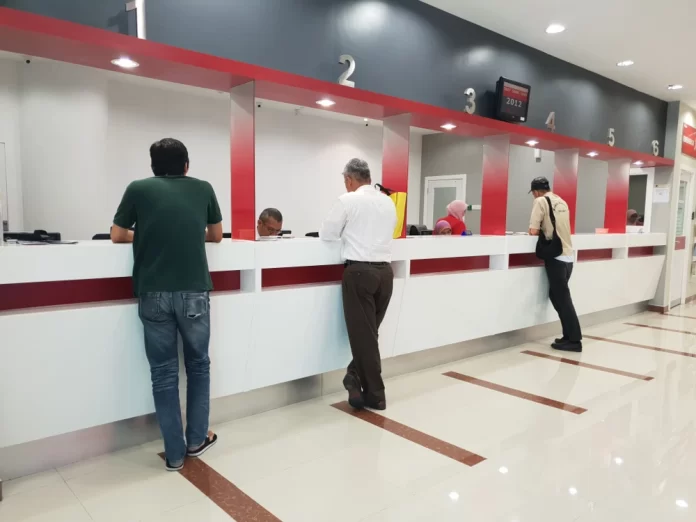
Sri Lanka’s banking sector demonstrated resilience and renewed business momentum during the first half of 2026, with results from several leading institutions highlighting substantial profitability, expanding balance sheets and increased lending activity as the country’s economy continued to stabilise.
The latest financial results provide an important snapshot of a banking industry operating in a changing economic environment. While individual institutions followed different strategic paths, the overall picture reflects banks increasingly focusing on credit expansion, deposit mobilisation, digital transformation, customer acquisition and long term balance sheet development.
Rather than viewing the results purely through changes in profitability, the first half performance provides a broader indication of the financial capacity being built across Sri Lanka’s banking system.
Commercial Bank Maintains Strong Position
Commercial Bank of Ceylon Group reported profit after tax of approximately Rs. 35.42 billion for the first six months of 2026, placing it among the strongest performers within Sri Lanka’s private banking sector.
The Group has continued to expand its balance sheet and deposit base while strengthening its position across retail, corporate, SME and international banking.
Its scale remains particularly significant within the financial system, providing considerable capacity to support businesses, individuals, trade and investment as economic activity gathers momentum.
Commercial Bank’s performance also reflects the importance of large domestic banks in supporting Sri Lanka’s economic transition, particularly as demand for private sector credit gradually strengthens.
Sampath Bank Sustains Strong Profitability
Sampath Bank recorded Bank profit after tax of approximately Rs. 16.6 billion during the first half of 2026.
At Group level, profit after tax reached approximately Rs. 17.9 billion, while Group profit before tax stood at around Rs. 26.6 billion.
The distinction between Bank and Group earnings remains important when assessing financial results, as consolidated figures incorporate the performance of subsidiaries and other Group interests.
Sampath Bank continues to maintain a significant position within Sri Lanka’s private banking industry, supported by its established retail and corporate banking operations and continued emphasis on technology and digital financial services.
Nations Trust Bank Reflects Strategic Expansion
Nations Trust Bank reported profit after tax of approximately Rs. 15.6 billion for the first half of 2026.
The overall result includes the impact of a one off tax credit associated with the acquisition of HSBC Sri Lanka’s retail banking business, an important consideration when interpreting the headline figure.
Beyond the accounting impact, the acquisition represents a significant strategic development for Nations Trust Bank, expanding its customer franchise and strengthening its position within selected areas of Sri Lanka’s retail and wealth banking market.
The Bank has also maintained momentum in lending, reflecting renewed demand for financial services as businesses and consumers respond to improving economic conditions.
Seylan Bank Records Solid H1 Performance
Seylan Bank reported profit before tax of approximately Rs. 9.30 billion and profit after tax of Rs. 6.08 billion during the first half of 2026.
The Bank’s total assets reached approximately Rs. 976 billion as at the end of June, bringing it closer to the Rs. 1 trillion asset milestone.
Loans and advances stood at approximately Rs. 650 billion, while deposits reached around Rs. 771 billion.
The figures demonstrate the scale Seylan Bank has developed within Sri Lanka’s banking industry and its continued focus on expanding customer relationships across lending, deposits, cards, remittances, trade and other financial services.
Its impaired loans ratio stood at 1.03 per cent, providing another important indicator of the Bank’s asset quality position.
Pan Asia Bank Reaches Important Asset Milestone
Pan Asia Bank recorded profit after tax of approximately Rs. 2.50 billion during the first half of 2026.
The Bank also crossed an important balance sheet milestone, with total assets reaching approximately Rs. 354 billion.
For a mid sized banking institution, crossing the Rs. 350 billion threshold represents an important stage in its development and demonstrates the opportunities emerging across different segments of Sri Lanka’s financial services industry.
Pan Asia Bank’s performance also illustrates that the strengthening of financial intermediation is not limited to the country’s largest institutions. Mid sized banks continue to play an important role in providing credit and financial services to individuals, SMEs and businesses.
DFCC Bank Continues to Build Scale
DFCC Bank continued to build scale and strengthen its core banking franchise during the first half of 2026.
The Bank reported core profit after tax of approximately Rs. 3.90 billion, while Group profit after tax stood at approximately Rs. 4.14 billion.
Beyond profitability, DFCC’s performance can be viewed within the context of its longer term strategy of strengthening its commercial banking franchise while retaining the development banking capabilities that have historically differentiated the institution.
The Bank continues to focus on areas including corporate and SME financing, retail banking, digital services and sustainable finance as it positions itself for longer term expansion.
NDB Performance Viewed in a Broader Context
National Development Bank’s first half performance requires consideration of specific accounting circumstances relating to the previously identified fraud.
The Bank recognised a revised estimated financial impact of approximately Rs. 13.58 billion, with its financial reporting incorporating the relevant accounting treatment and restatements.
These circumstances make conventional comparisons less meaningful and reinforce the importance of assessing NDB’s performance within its broader operational and financial context.
The institution nevertheless remains an important participant in Sri Lanka’s banking landscape, serving corporate, SME, retail and investment banking customers.
A Broader Story Than Profits
The first half results tell a broader story about Sri Lankan banking than headline profitability alone.
Assets, deposits, lending portfolios and customer franchises are expanding across several institutions. Banks are also investing heavily in digital banking, data, cybersecurity, customer experience and operational efficiency.
These developments are particularly important because the banking sector will have a central role in determining how effectively Sri Lanka converts macroeconomic stability into sustainable private sector growth.
As businesses regain confidence, demand for working capital, investment financing, trade finance and project funding is likely to become increasingly important.
Banks will therefore be required not only to maintain financial strength but also to channel capital towards productive sectors capable of generating employment, exports, investment and economic value.
From Stability to Sustainable Growth
Sri Lanka’s banking system has navigated an extraordinary period encompassing economic contraction, sovereign debt restructuring, inflation, interest rate adjustments and considerable pressure on businesses and households.
The operating environment in 2026 presents a different set of opportunities and challenges.
The emphasis is increasingly shifting towards sustainable credit expansion, financial inclusion, digitalisation, SME development and financing productive economic activity.
The H1 2026 results indicate that leading banks possess substantial financial capacity to participate in this next stage.
At the same time, differences between individual institutions underline the importance of assessing banking performance through multiple indicators rather than a single profit number. Asset quality, capital strength, liquidity, deposits, lending, operational efficiency and strategic investments are equally important in evaluating the health of a financial institution.
Taken collectively, the results portray a banking sector demonstrating resilience while preparing for a potentially more growth oriented phase of Sri Lanka’s economic recovery.
For the wider economy, that capacity matters. A strong banking system can provide the financial foundation required for businesses to invest, exporters to expand, entrepreneurs to build new enterprises and consumers to participate more confidently in economic activity.
The World Scene
Globally, banking in 2026 is also being shaped by a transition from the extraordinary monetary conditions of recent years towards a more complex environment of changing interest rates, technological transformation and geopolitical uncertainty. Major banks continue to focus on capital strength, digitalisation, artificial intelligence, cybersecurity and operational efficiency while responding to evolving regulatory expectations. Capital markets and trading activities have provided opportunities for some international institutions, while credit quality and funding costs remain important considerations across markets. The broader global picture is therefore one of resilience combined with transformation, as banks seek sustainable growth while adapting to rapidly changing economic and technological conditions.
