
The Sri Lankan Government is set to restore criminal sanctions for serious foreign exchange offences following investigations into an alleged large scale foreign exchange fraud that exposed significant weaknesses in the country’s legal framework.
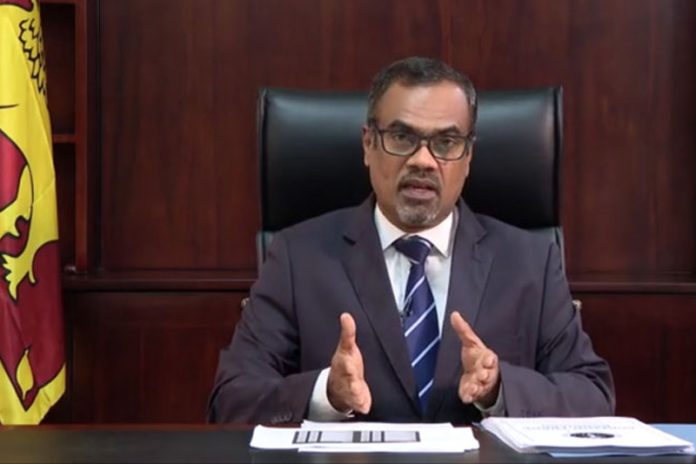
Finance and Planning Deputy Minister Dr Anil Jayantha Fernando informed Parliament that the Government will submit a Cabinet paper to amend the Foreign Exchange Act No. 12 of 2017, reclassifying serious foreign exchange violations as criminal offences rather than matters subject only to civil penalties and fines.
The proposed amendments follow investigations by the Criminal Investigation Department (CID) into an alleged fraudulent import payment scheme through which approximately US$715 million was transferred overseas between January 2023 and March 2026. Investigators identified 105 shell companies, 55 individuals, 227 bank accounts and more than 24,000 telegraphic transfers processed through both State and private banks. Authorities also uncovered alleged collusion involving banking officials, while parts of the network were reportedly linked to international money laundering operations associated with Dubai based drug traffickers.
Officials from the Central Bank of Sri Lanka told Parliament’s Committee on Public Finance that the existing Foreign Exchange Act, introduced in 2017 to replace the Exchange Control Act, removed criminal liability for foreign exchange violations, leaving investigators dependent on proving related offences such as money laundering before prosecutions could proceed.
Committee on Public Finance Chairman Dr Harsha de Silva acknowledged that the present legal framework had complicated criminal investigations and enforcement.
The Government emphasised that the proposed reforms will target only serious offences involving fraud, false documentation and deliberate abuse of the foreign exchange system. Legitimate transactions and administrative breaches will continue to be dealt with under civil procedures, ensuring that Sri Lanka’s liberalised foreign exchange regime remains intact while strengthening safeguards against financial crime.
