
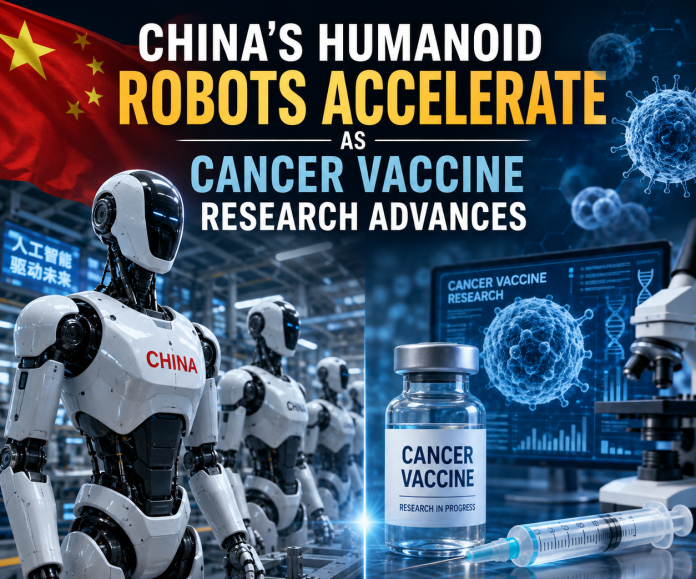
Rapid developments in humanoid robotics and cancer vaccines are highlighting how emerging technologies could reshape industries ranging from manufacturing to healthcare.
According to The Economist, a Chinese humanoid robot called Superman recently recorded a running speed of 12.66 metres per second, exceeding the peak speed associated with sprint legend Usain Bolt, although the demonstration ended with the robot crashing into a wall.
Chinese companies are expected to sell around 50,000 humanoid robots this year, more than three times the previous year’s figure. China has made significant progress in developing the hardware required for humanoid robots, while attention is increasingly turning towards software, artificial intelligence and the ability of robots to perform complex real-world tasks.
Meanwhile, medical researchers are reporting encouraging developments in personalised cancer vaccines. Recent trial results involving intismeran, an experimental vaccine being studied for melanoma, have generated interest among clinicians.
Together, the developments demonstrate the accelerating convergence of artificial intelligence, robotics and biotechnology, with potentially significant implications for businesses, healthcare systems and the global economy.
