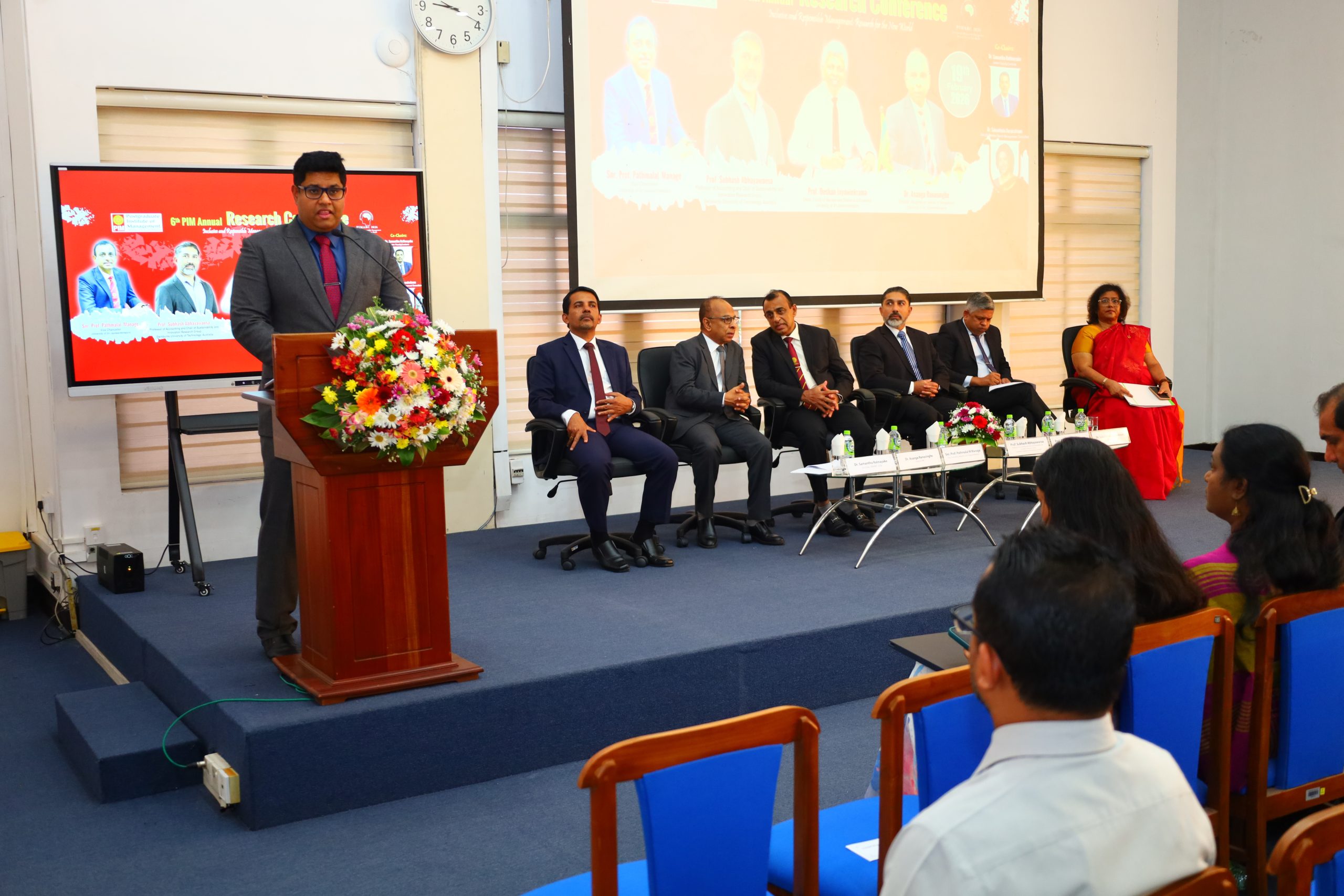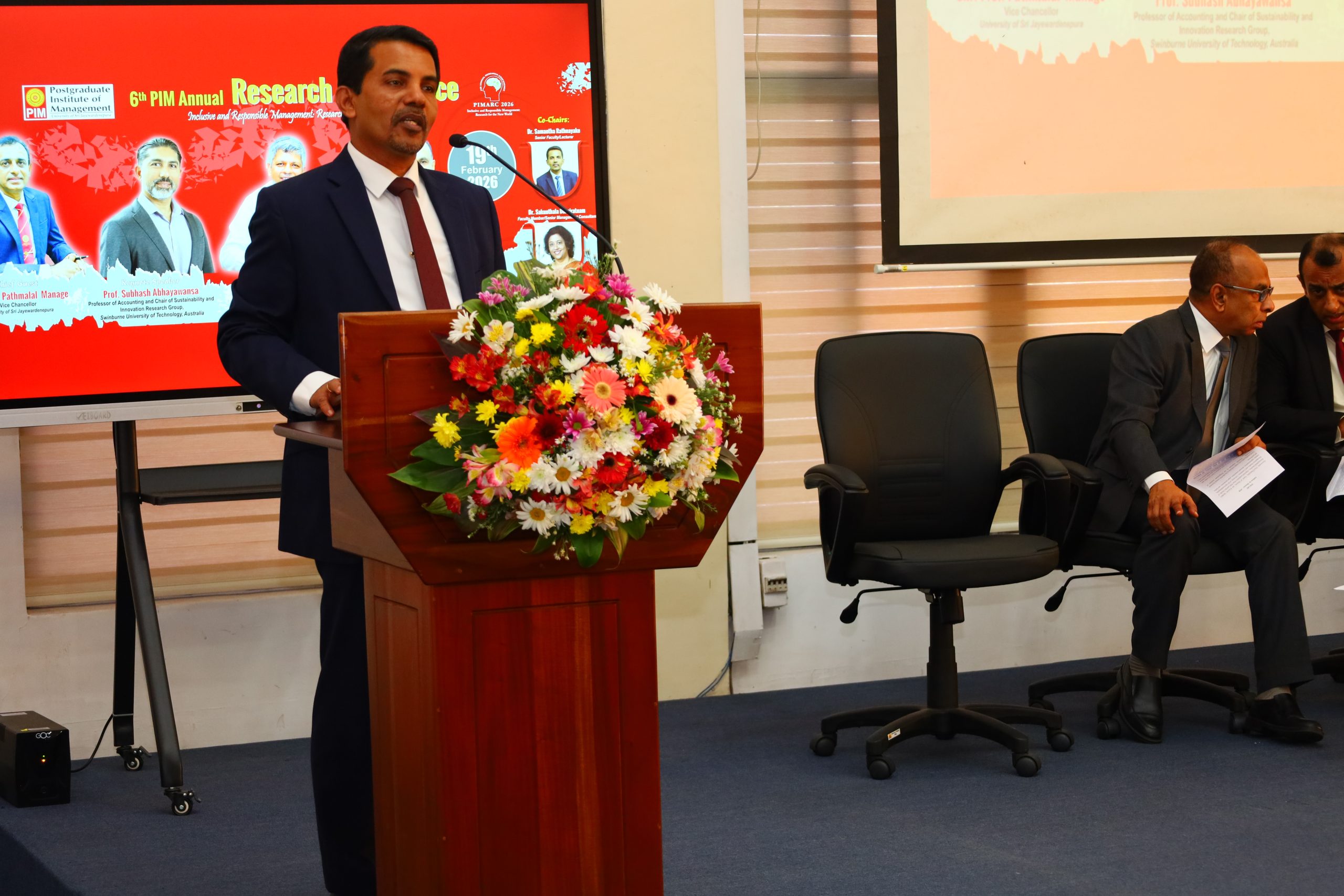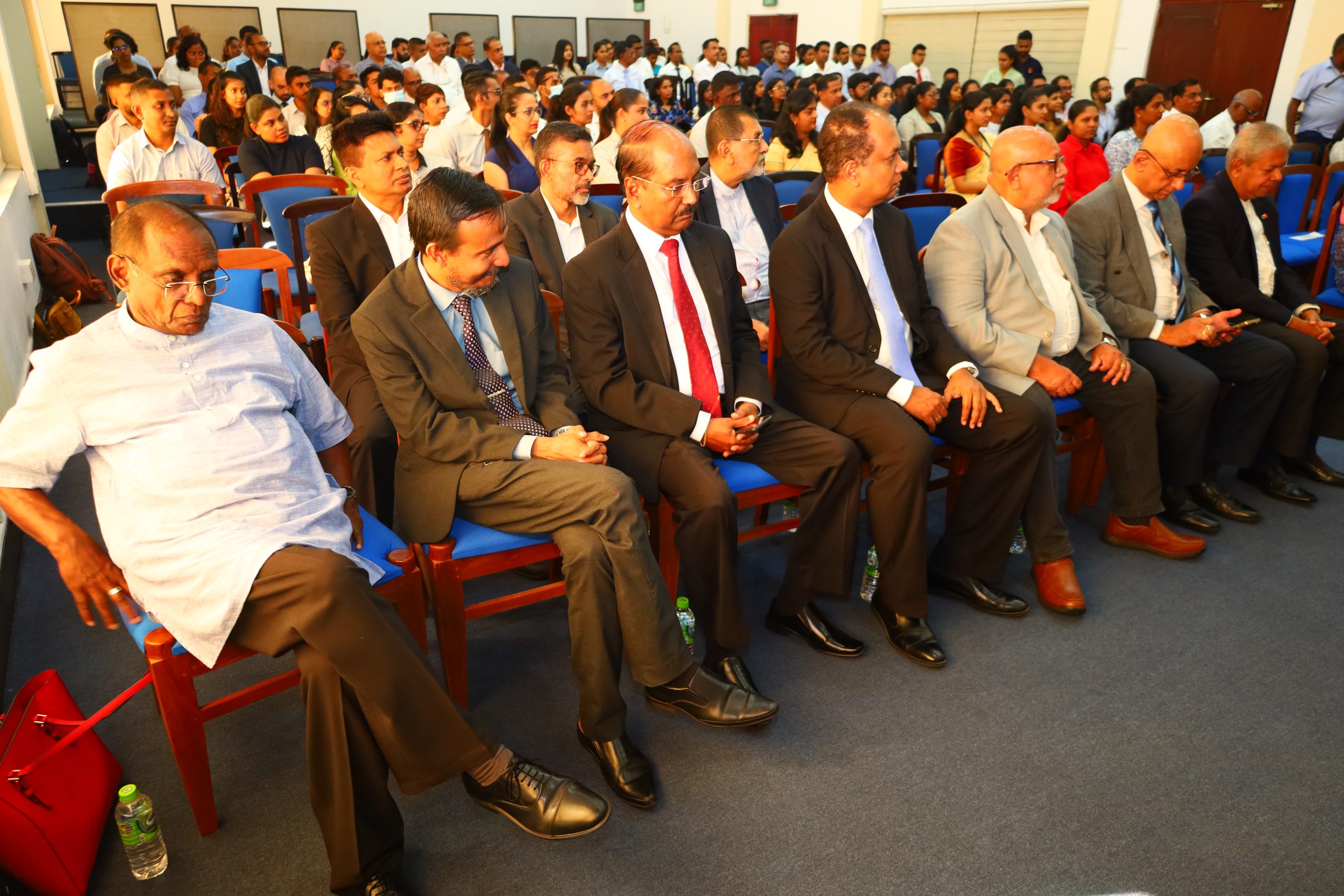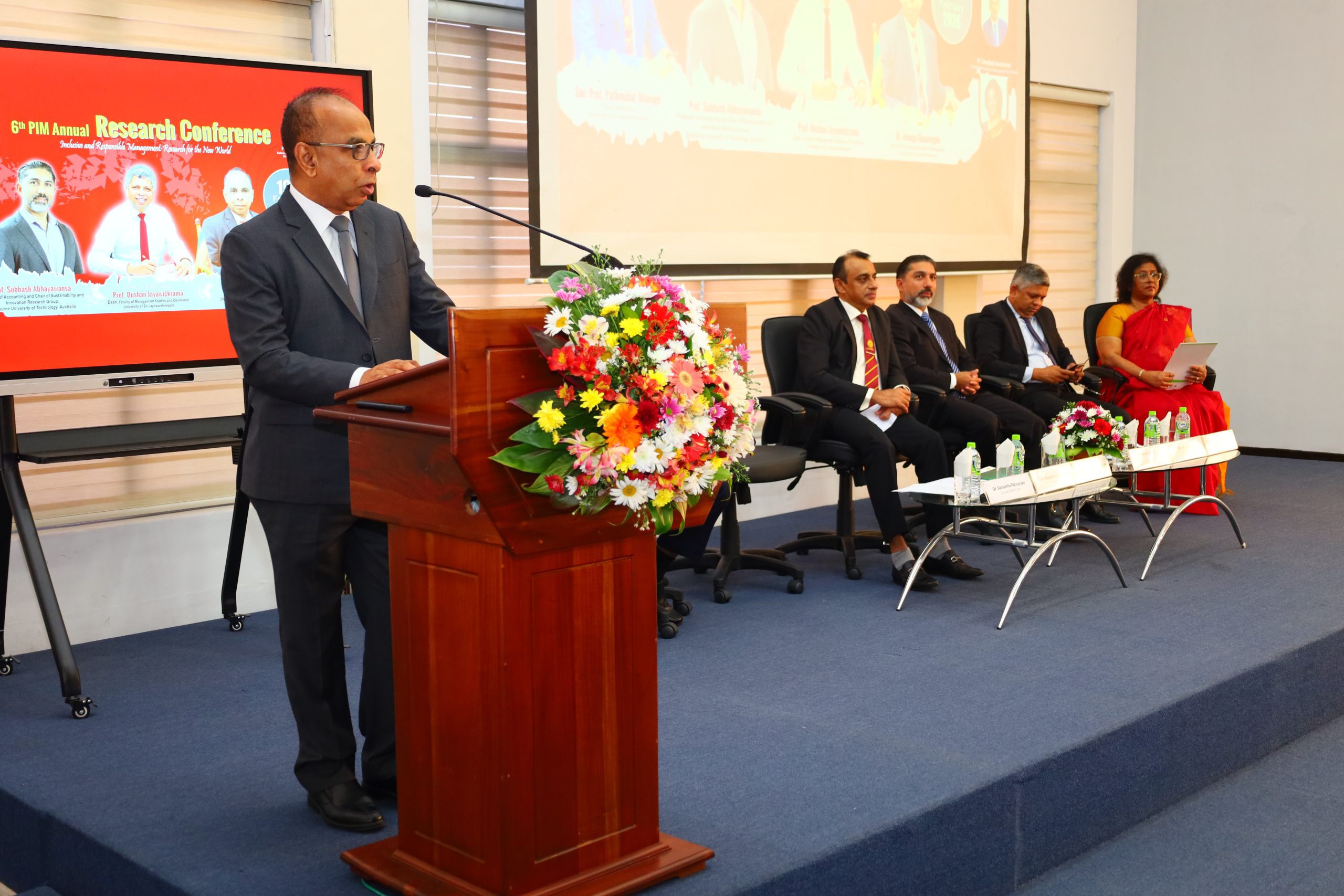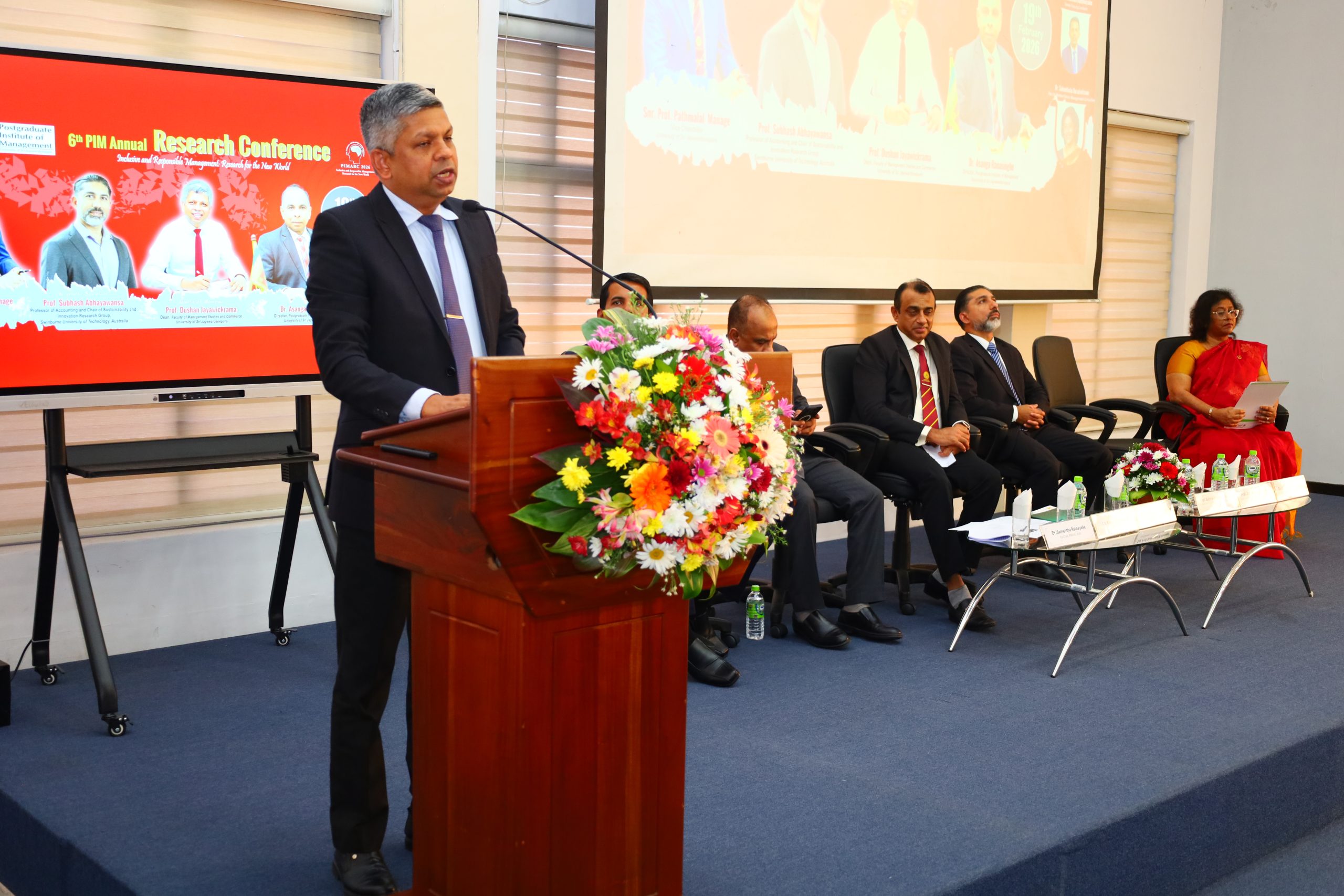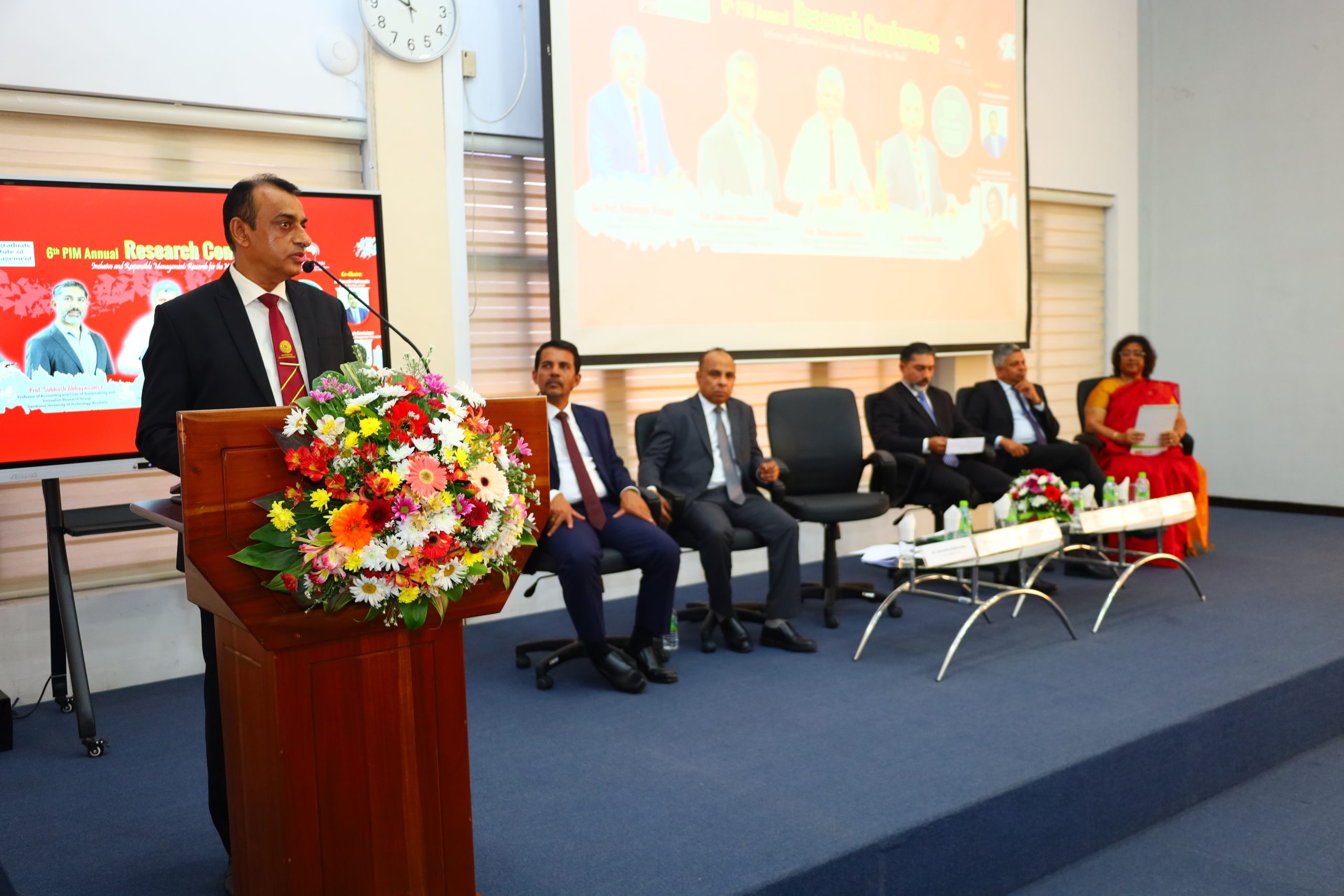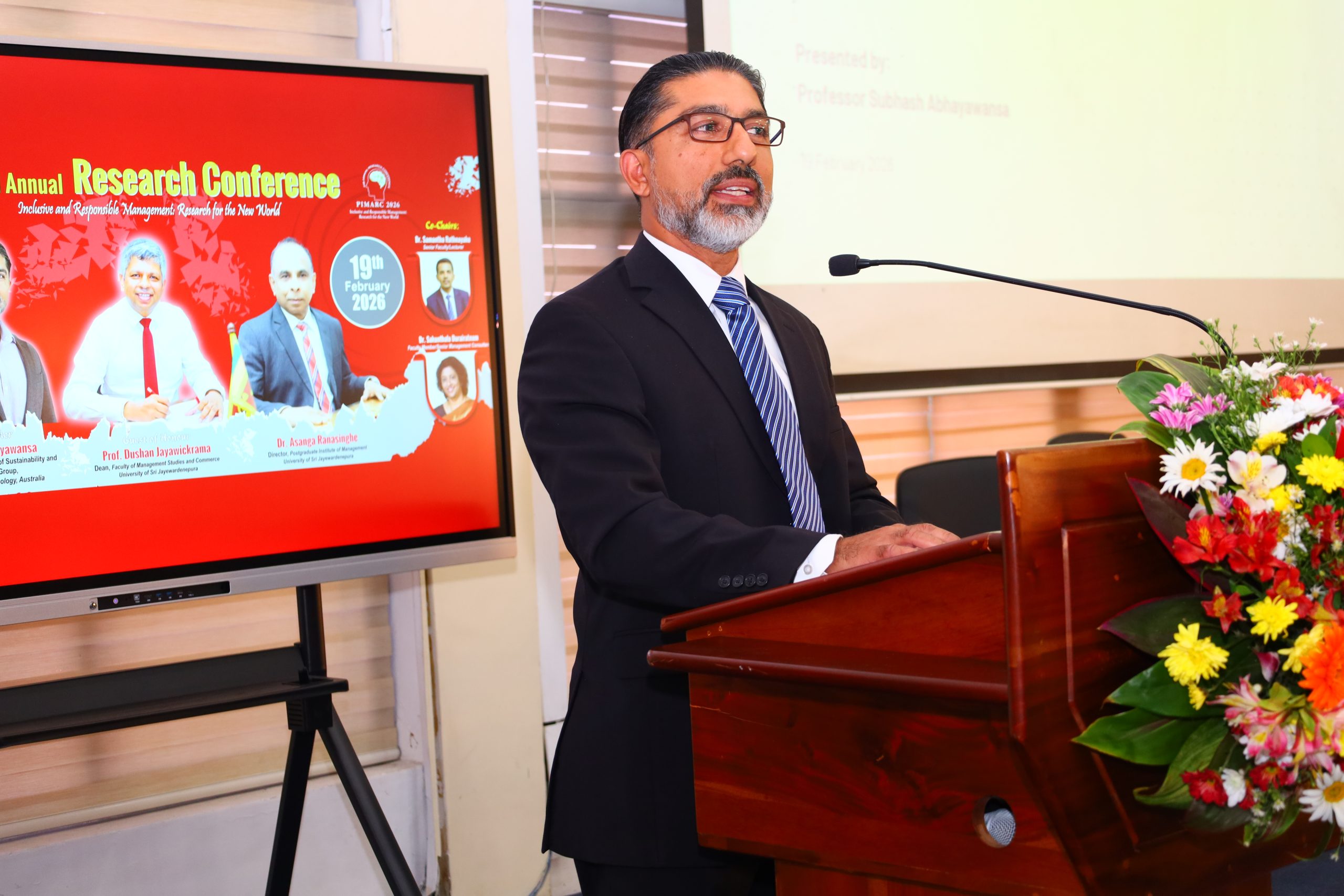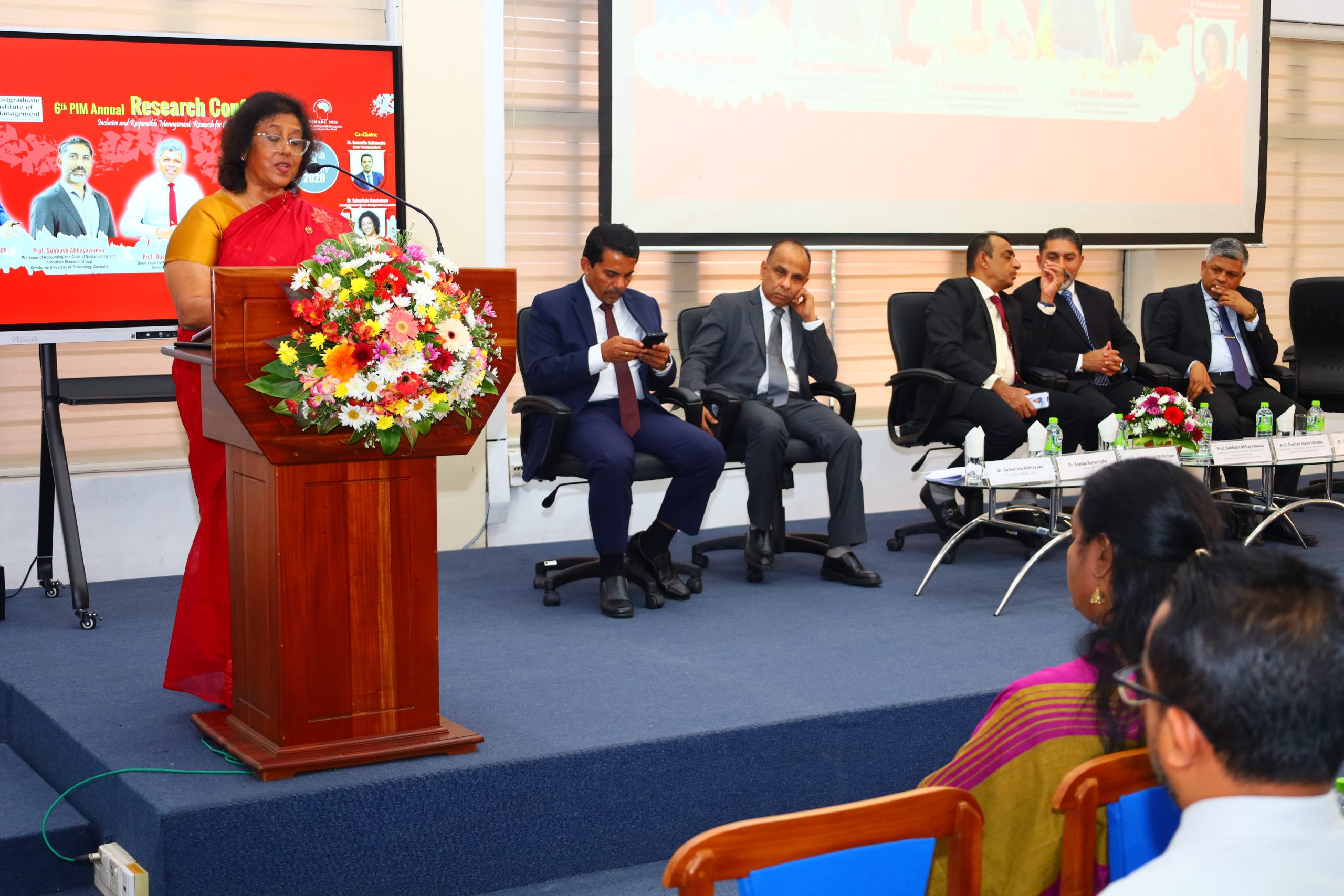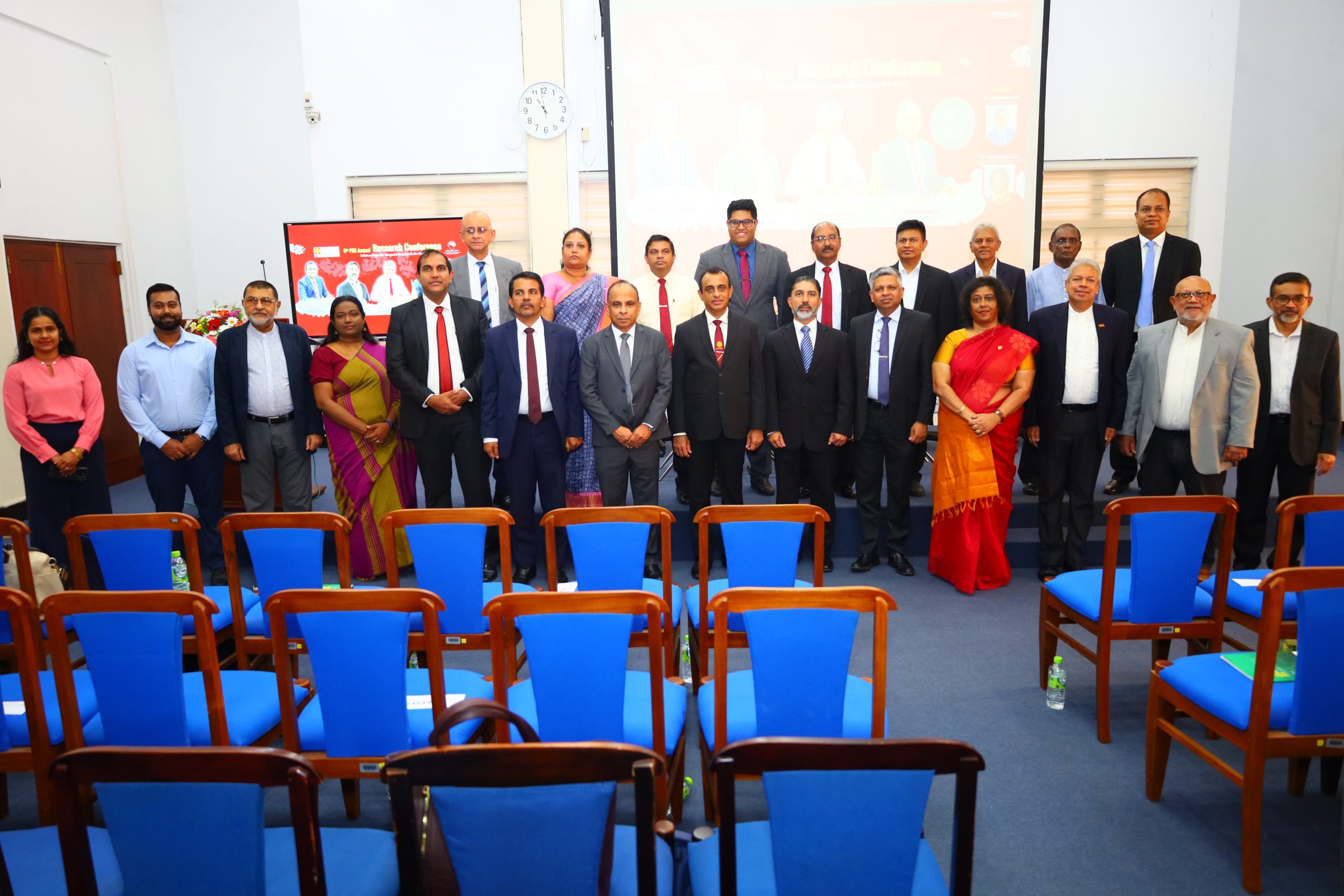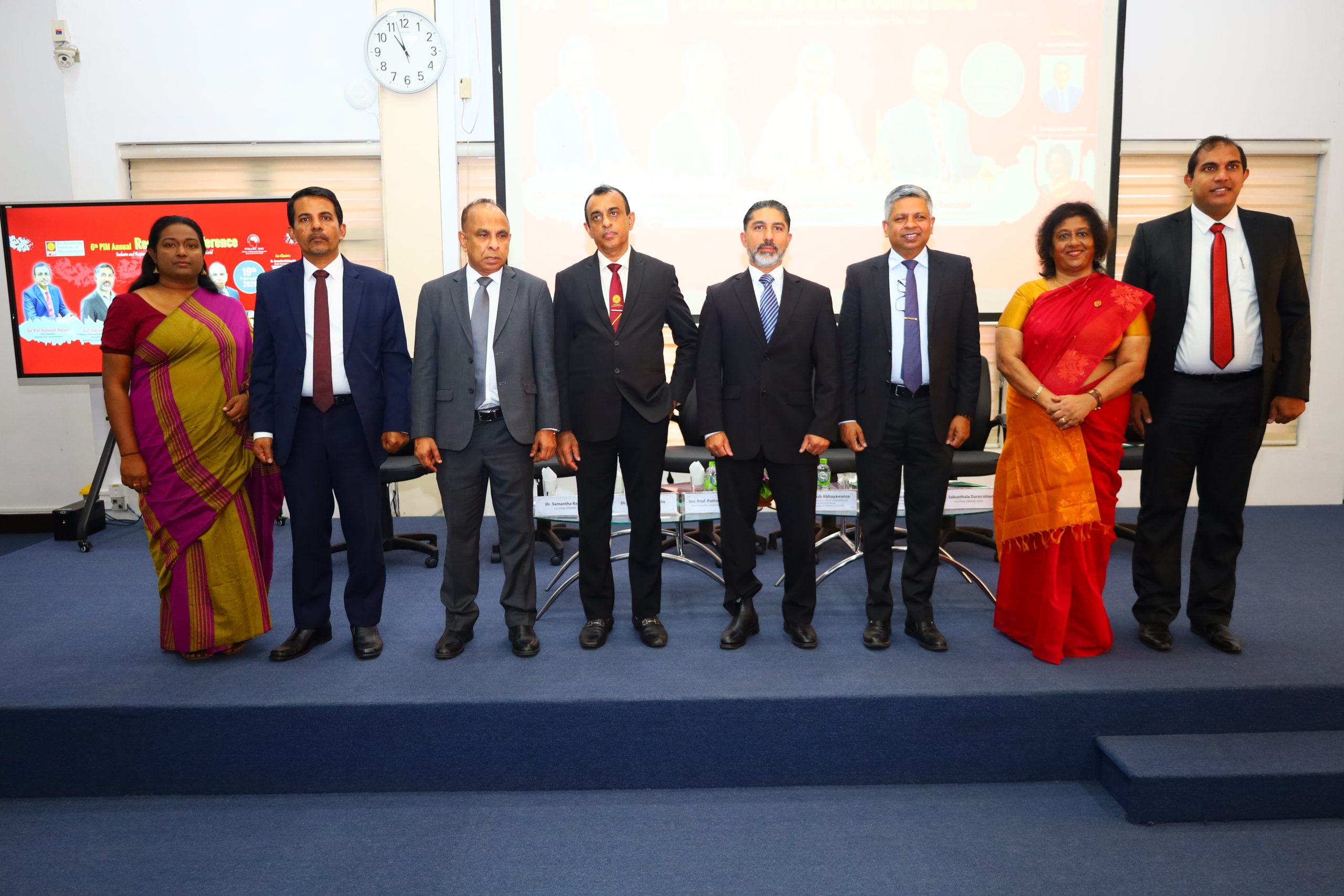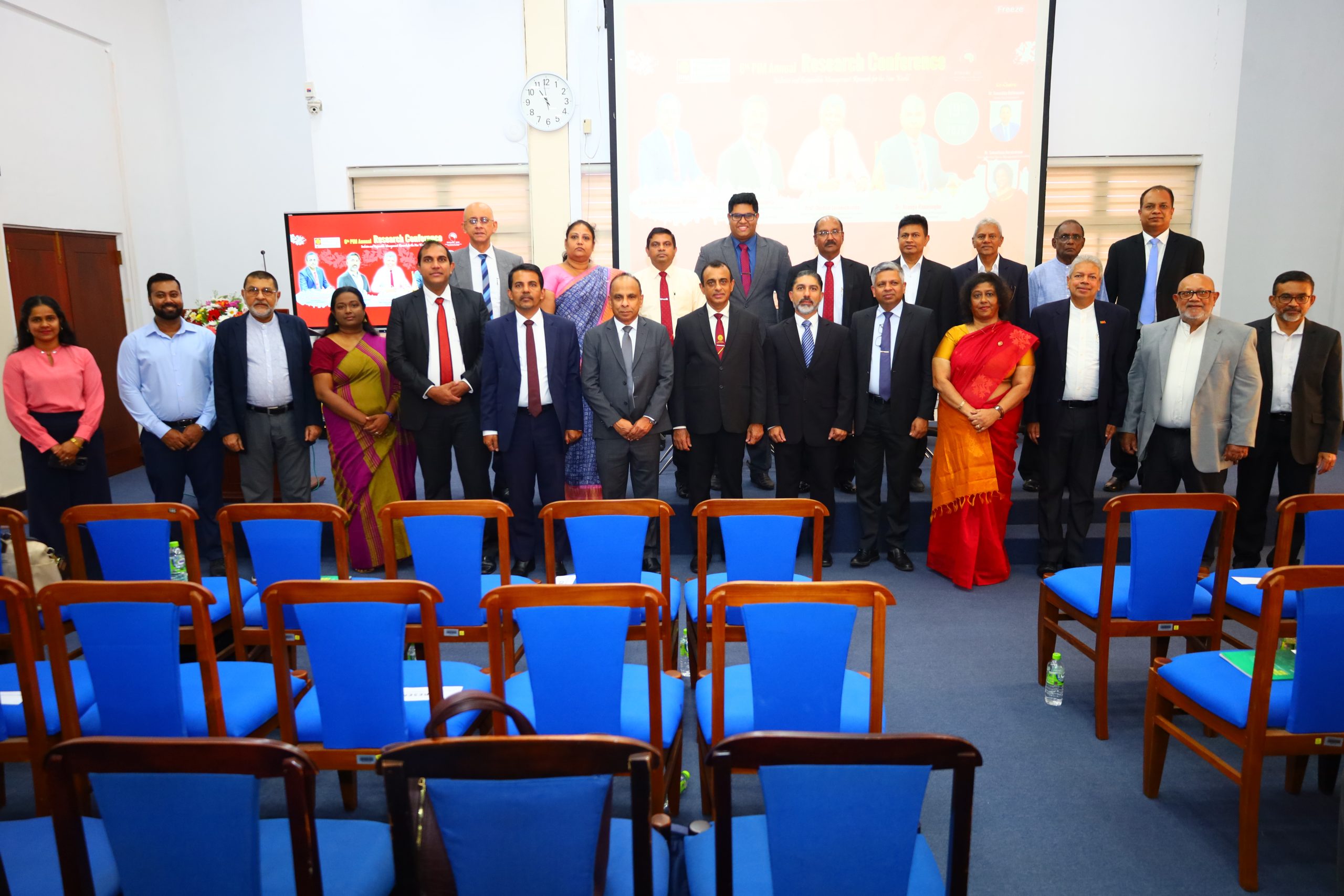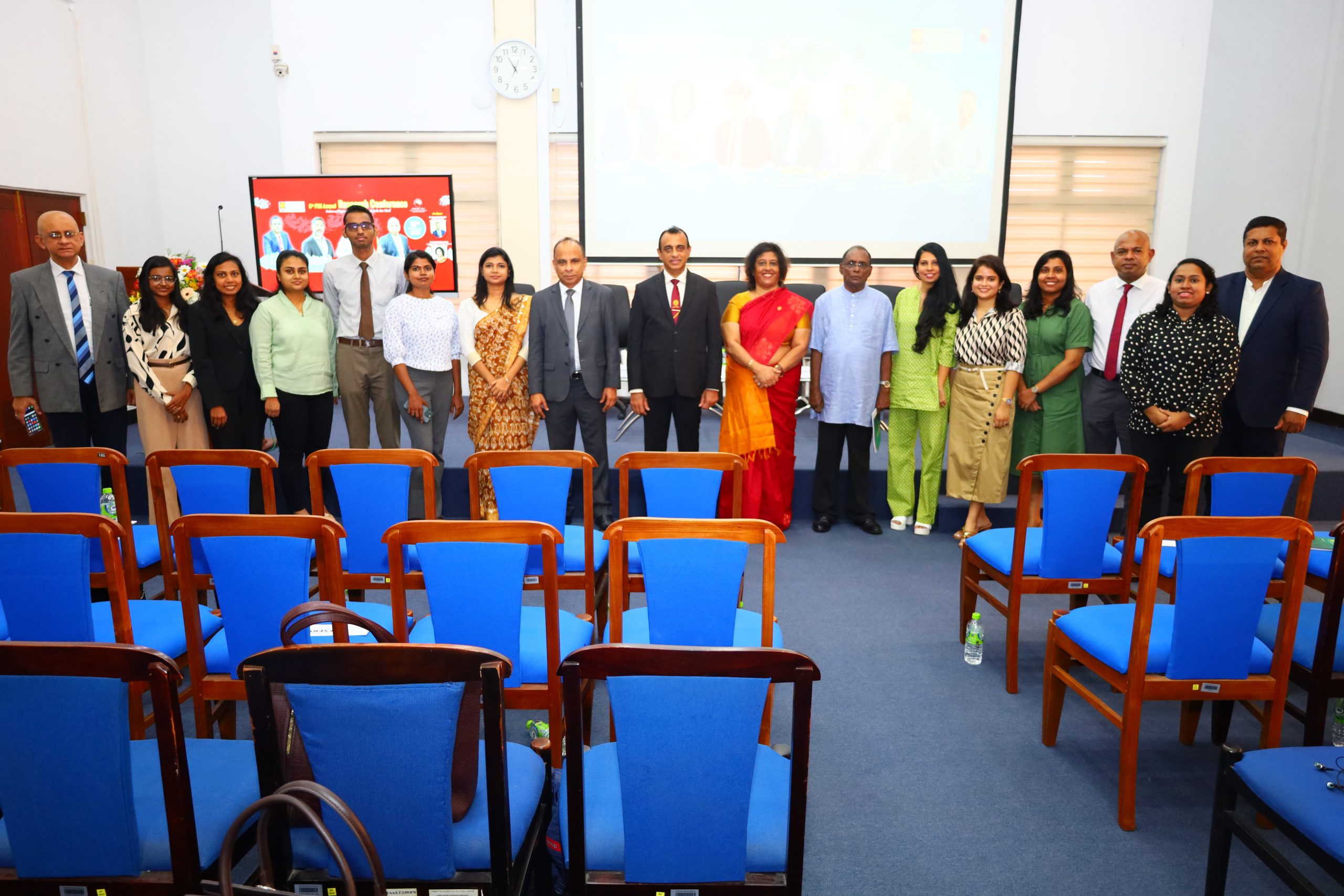
The Postgraduate Institute of Management (PIM) successfully concluded its annual research conference, PIMARC 2026, on February 19, convening academics, business leaders, policymakers, and emerging scholars for a day of critical reflection and forward-thinking dialogue.
Held under the theme “Inclusive and Responsible Management: Research for the New World,” this year’s conference addressed a question that resonates deeply in today’s climate: How can research move beyond academic publication to become practical knowledge that informs policy, strengthens organisations, and supports responsible decision-making in an evolving world?
Discussions centered around relevant and meaningful research initiatives and on the importance of collaboration between academics and practioners.
Strengthening research collaboration with the University of Sri Jayewardenepura, this year too PIMARC 2026 aligned with the International Conference of Business Management (ICBM) 2026.
Held under the overarching PIMARC 2026 theme of “Inclusive and Responsible Management: Research for the New World,” the focus for the joint conference with ICBM 2026 was, “Inclusive and Responsible Management for a Circular Economy and Digital Future.” The event reinforced the importance of rigorous, evidence-based research in supporting national development while maintaining global relevance in an increasingly complex world.
Co-Chairs of ICBM 2026 Dr. Isuru Manawadu and Dr. Sepali Bamunusinghe, together with Co-Chairs of PIMARC 2026 Dr. Sakunthala Durauratnam and Dr. Samantha Rathnayake ensured a seamless integration of the two academic conferences delivering an insightful and thought-provoking outcome.
The day began with the launch of the PIM Teaching Case Studies 2026 at PIMARC 2026, reflecting PIM’s strong commitment to research dissemination through journals, magazines, conference papers, and case studies. The publication follows the 2021 Management Case Studies collection and features 11 teaching cases covering Sustainability, Governance and Leadership, and Quality, Service and Operational Excellence. Curated by Dr. Asanga Ranasinghe, Dr. Ananda Jayawaradana, Dr. Sakunthala Durairatnam, and Dr. Sujeewa Damayanthi, the cases present real organisational success stories linked to key management concepts. The publication consists of teaching notes and the cases provide valuable learning material for graduate and postgraduate management education.
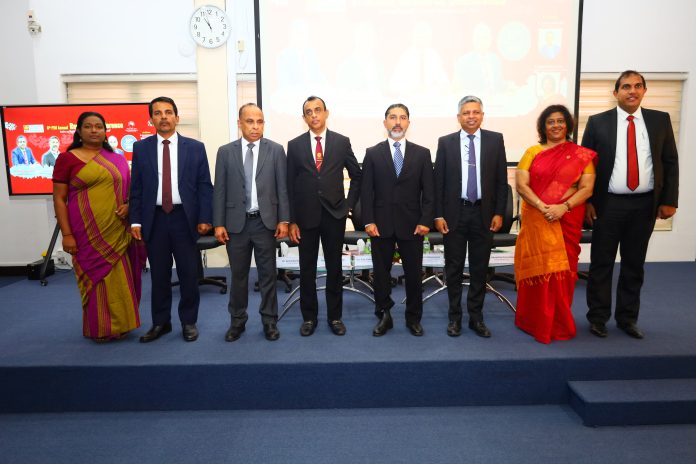
The highlighted of the day was the insight-driven and very stimulating Industry Academia Panel Discussion with the participation of the distinguished panellists Ms. Michelle Senanayeke Group Chief People and Corporate Communication Officer – Sunshine Holdings PLC and Board Director, Sunshine Consumer Lanka Limited, Dr. Samith Perera – Director Academy of Supply Chain Management / Immediate Past president Lanka Sathosa, Mr.Shamal Gunawardene, COO CEAT Kelani Holdings, Dr. Asanga Ranasinghe, Director PIM, Dr. Riyad Ismail, Visiting faculty PIM, Dr. Isuru Manawadu Co-Chair ICBM 2026, University of Sri Jayewardenepura. The discussion was moderated by Snr. Professor Ajantha S. Dharmasiri, Senior Professor in Management, PIM.
The conference was further enriched by the presence of distinguished special guests: the Chief Guest, the Guest of Honour, and the Keynote Speaker.
In his opening remarks, Dr. Asanga Ranasinghe, Director of PIM underscored the importance of research moving beyond academic publications to become practical knowledge that informs policy, strengthens organizations, and supports responsible decision-making while anticipating future challenges. He also highlighted the importance of stronger partnerships between academia and practice, creating a shared dialogue where evidence and real-world experience translate research into action.
The Chief Guest, Senior Professor Pathmalal Manage, Vice Chancellor of the university of Sri Jayewardenepura, highlighted that research is fundamental to academic institutions and must be conducted through inclusive and responsible management practices. Drawing on his experience from his own research journey, he spoke of the need for multidisciplinary and transdisciplinary collaboration, he noted that addressing complex global challenges such as climate change, digital transformation, and public health requires engagement across diverse disciplines and stakeholder groups. He also stressed that research guided by integrity, ethical standards, and strong management perspectives can produce meaningful outcomes that contribute to national development.
The Guest of Honour Professor Dushan Jayawickrama, Dean of the Faculty of Management Studies and Commerce, University of Sri Jayewardenepura, emphasized on the value of collaborative research platforms that bring together academia, industry, and learning partners to generate knowledge that is both intellectually rigorous and practically relevant. He noted that such engagement encourages scholars to challenge existing assumptions, think critically, and translate theoretical insights into practical solutions that benefit organizations and the wider community. He further emphasized that closer collaboration between universities and industry can help ensure that research contributes meaningfully to practice and societal progress.
Distinguished keynote speaker Professor Subhash Abhayawansa, Professor of Accounting and Chair of Sustainability and Innovation Research Group, Swinburne University of Technology, Australia, highlighted the need to bridge the persistent gap between academic research and real-world decision-making. While institutions like PIM generate a growing body of knowledge through cutting-edge research, translating this evidence into practical action for professionals, practitioners, and policymakers remains a challenge. Referring to the concept of innovation diffusion, the speaker emphasised that moving from discovery to meaningful change requires active engagement, clear communication, and actionable insights. He noted that researchers must ensure their work is relevant, credible, accessible, and actionable, while policymakers and practitioners must also engage more purposefully with research to transform evidence into effective decisions and sustainable outcomes. He elaborated this through his own experience of real-world examples making his presentation very relevant and meaningful.
This year’s PIMARC featured stimulating paper presentations, in the streams of Doctoral Colloquium and research papers covering the disciplines of Management Research Projects, Entrepreneurship Skills Projects, Management Field Research Projects and Guided Independent Study Projects. These sessions were convened under the guidance of a learned panel including, Senior Professor Ajantha S Dharmasiri, Prof. Dinesh Samarasinghe, Prof. Nalin Abeysekera, Prof. Wasanthi Madurapperuma, Dr. A.K.L. Jayawardana, Dr. Sujeewa Damayanthi, Dr. Ravi Bamunusinghe, Dr. Mayuri Attapattu, Dr. Travis Perera, Dr. Trevor Mendis, Mr. Champal De Costa, and Mr. Tharindu Amarasekera.
With another successful conference concluded, PIM reaffirmed its role as a leading national platform for management scholarship — nurturing ideas that guide leaders to build organisations that are not only successful, but socially conscious and sustainable.