
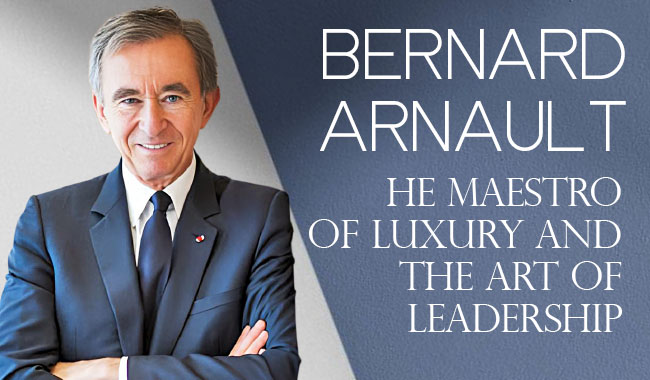
In the grand symphony of global business, few names resound as powerfully as that of Bernard Arnault. Born in Roubaix in 1949, in the heart of a modest French family, Arnault would rise to become the steward of elegance, the patron of creativity, and the custodian of some of the most treasured brands in human history. As founder, chairman, and chief executive officer of LVMH Moët Hennessy Louis Vuitton, he did not merely build a business empire; he shaped a cultural legacy.
From an early age, Arnault exhibited both discipline and artistry. A gifted pianist, he once dreamed of a life in music, only to channel that same sense of rhythm and composition into the world of business. What he created was not so much a company as a grand orchestra of maisons, each brand playing its own part in harmony yet bound together under his baton.
The Dior Revelation
Arnault’s defining moment came in 1984 with the bold acquisition of Boussac Saint-Frères, including the jewel of Christian Dior. Where others saw decline, he perceived potential. An anecdote from that time is etched into business lore: during his first visit to New York, Arnault asked a taxi driver if he knew the French president. The driver replied he did not, but he knew Christian Dior.
That revelation opened Arnault’s eyes. A name, a story, a brand—these could outlive political offices, carrying a power of recognition that spanned continents. Dior became the canvas upon which Arnault painted his philosophy: revive heritage, nurture creativity, and infuse excellence into every seam and stitch.
The Birth of LVMH
The year 1987 marked another turning point. Arnault orchestrated the union of Moët Hennessy and Louis Vuitton, creating LVMH, a beacon of modern luxury. This was no simple merger but a renaissance—a gathering of noble houses, each retaining its heritage yet thriving under collective strength.
Louis Vuitton, once a maker of fine trunks, and Moët Hennessy, born from vineyards and distilleries, were bound together in a single constellation. Arnault’s genius lay not only in acquisition but in orchestration: every maison preserved its identity while drawing upon shared resources, a delicate balance of tradition and modernity. Today, with over 80 luxury brands under its wing and a market capitalisation surpassing €350 billion, LVMH stands as the undisputed titan of the luxury world.
The Philosophy of Excellence
Arnault has always insisted that luxury is not about price tags but about craftsmanship, creativity, and timelessness. “Marketing alone does not sell luxury,” he once remarked, “what sells is excellence.” He understood that a Dior gown or a Dom Pérignon vintage was not merely an item but an emotion, a story, an heirloom.
His foresight in expanding into Asia before others cemented LVMH’s dominance. Markets like China and Japan became fertile ground for his brands, while his insistence on nurturing visionary designers ensured LVMH remained the heartbeat of creativity.
Arnault’s leadership blends discipline with inspiration. He is known to rise early, scrutinise details, and yet give freedom to his creative directors. This paradox of rigour and trust has allowed brands like Louis Vuitton, Fendi, and Givenchy to soar.
Legacy Beyond Wealth
Today, Bernard Arnault is counted among the wealthiest individuals in the world, often trading places at the top of the global rich list with Elon Musk. Yet, his true wealth lies not in figures but in the splendour of brands that inspire dreams across continents. He has transformed luxury from a niche indulgence into a cultural force, accessible not to all, but admired by all.
Like a maestro leading a timeless symphony, Arnault reminds us that leadership is not simply about commanding but about creating harmony, nurturing talent, and leaving behind a legacy that resonates long after the applause has faded.
References
Forbes. (2023). Bernard Arnault & family – Profile and Net Worth. Retrieved from https://www.forbes.com
Financial Times. (2023). Bernard Arnault: The quiet power behind LVMH.
The Economist. (2023). The Luxury Empire of Bernard Arnault.
Harvard Business Review. (2019). Leadership Lessons from Bernard Arnault.
Kotler, P. (2020). Principles of Marketing – Case on LVMH.
