
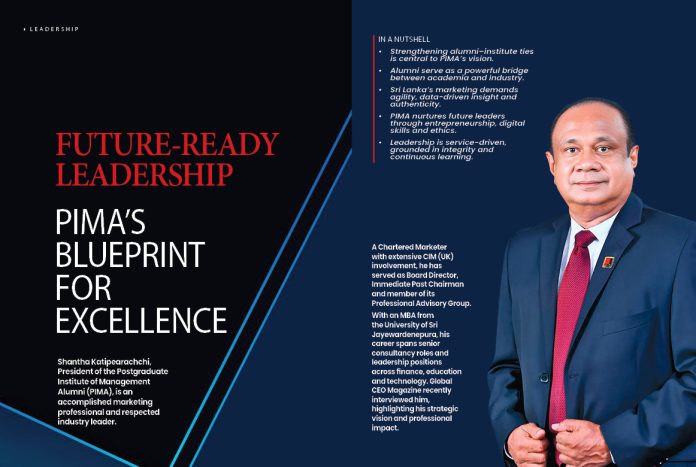
Shantha Katipearachchi, President of the Postgraduate Institute of Management Alumni (PIMA), is an accomplished marketing professional and respected industry leader.
A Chartered Marketer with extensive CIM (UK) involvement, he has served as Board Director, Immediate Past Chairman and member of its Professional Advisory Group.
With an MBA from the University of Sri Jayewardenepura, his career spans senior consultancy roles and leadership positions across finance, education and technology. Global CEO Magazine recently interviewed him, highlighting his strategic vision and professional impact.
As President of the PIM Alumni Association, how do you envision strengthening the connection between the institute and its alumni community to foster professional growth and leadership excellence?
Strengthening Alumni–Institute Connection
My vision centres on creating a dynamic ecosystem through three key pillars. First, I am strengthening relationships between PIMA’s executive committee and the PIM fraternity through regular collaborative sessions. Second, we are actively supporting PIM’s current initiatives and programmes, providing alumni expertise and industry connections that amplify their impact. Third, we are demonstrating PIMA’s tangible value to current students seeking development and professional growth by showcasing how alumni membership accelerates career progression.
We are implementing structured mentorship and education programmes, industry-specific forums, and organising thought leadership sessions featuring accomplished alumni. We also create opportunities while providing organisations access to emerging talent. This integrated approach ensures every alumnus feels valued as a lifelong stakeholder while positioning PIM as Sri Lanka’s premier management education destination.
In your view, what role can alumni associations play in bridging academia and industry, especially in driving innovation, research collaboration, and mentorship for emerging professionals?
Bridging Academia and Industry
Alumni associations serve as vital conduits between theory and practice. At PIMA, I am leveraging our base of over 5,000 alumni, including MDs, CEOs, and C-suite executives, as resource persons for focused programmes and well-planned networking opportunities. These knowledge-sharing sessions and meetups provide current PIM students and PIMA members with invaluable real-world perspectives while creating powerful networking opportunities to connect with potential employers.
Beyond these sessions, we are facilitating collaborative initiatives, tackling contemporary challenges, and creating pathways within alumni-led enterprises. We plan future programmes to pair emerging professionals with experienced alumni, providing guidance that extends beyond textbooks into strategic decision-making. This symbiotic relationship accelerates knowledge transfer, drives innovation, and ensures graduates enter the workforce equipped with relevant skills and industry connections.
Having worked as a marketer for several leading business entities, what key lessons or trends have you observed in Sri Lanka’s marketing landscape that today’s professionals should pay attention to?
Key Marketing Landscape Insights
Sri Lanka’s marketing landscape demands adaptability and strategic foresight. The digital revolution has made omnichannel presence non-negotiable, with consumers expecting seamless experiences across touchpoints. Today’s professionals must master data analytics for actionable insights rather than relying solely on intuition.
Authenticity and purpose-driven branding resonate powerfully with conscious consumers scrutinising corporate values. The rise of local consciousness presents opportunities for brands celebrating Sri Lankan heritage while maintaining global standards. Agility has become paramount; rapidly pivoting strategies amid economic volatility separates thriving organisations from struggling ones.
Social commerce is reshaping purchase journeys, requiring integrated strategies combining content, community, and commerce. Relationship marketing through personalised, technology-enabled experiences creates sustainable competitive advantages. Marketing professionals must balance creativity with analytical rigour while remaining ethically grounded.
How is the PIM Alumni Association contributing to nurturing the next generation of business leaders, particularly in areas such as entrepreneurship, digital transformation, and ethical leadership?
Nurturing Next-Generation Business Leaders
PIMA expands its services in the ensuing year in line with comprehensive initiatives targeting critical competencies for future leadership. Our current alumni members who have demonstrated entrepreneurial competencies will share their insights in programmes that provide aspiring entrepreneurs with mentorship, seed funding connections, and business model development support.
Recognising the imperative of digital transformation, we have planned modules on emerging technologies, AI applications, and digital strategy formulation. Our ethical leadership forum conducts discussions on corporate governance, sustainability, and social responsibility.
We are planning to partner with leading organisations for masterclasses on disruptive innovation, change management, and strategic foresight. Our platform facilitates peer learning through alumni success stories, failure analyses, and collaborative problem-solving sessions. These interventions ensure PIMA alumni remain equipped to navigate complexity and lead with integrity.
As an experienced management and marketing consultant, what guiding philosophy or principle has most influenced your leadership journey, and what advice would you offer to aspiring professionals?
Guiding Philosophy and Advice
My leadership philosophy is: “Leadership is influence earned through service, not authority imposed through position.” As a management and marketing consultant specialising in sales operations, I leverage expertise for overall business development, particularly developing sales leaders who drive organisational growth. This servant-leadership approach builds trust and creates sustainable impact.
My advice to aspiring professionals: cultivate intellectual curiosity and never stop learning. Embrace discomfort as a prerequisite for growth; valuable lessons emerge from challenges. In sales operations, stepping beyond current competencies unlocks exponential growth.
Build relationships authentically through mutual value creation, not transactional exchanges. Maintain unwavering ethical standards; reputation takes decades to build but moments to destroy. Develop strategic patience while maintaining tactical urgency. Success requires persistent effort, continuous adaptation, and resilience through setbacks.
Seek mentors actively and become one generously; the wisdom transferred through mentorship accelerates growth exponentially. Stay grounded in purpose: understand your “why” before pursuing your “how”. Celebrate small wins while keeping sight of larger visions. In developing sales leaders, I have witnessed how empowering others multiplies impact far beyond individual contributions.
Leadership is about enabling others to achieve collective goals. Your legacy will be measured by the leaders you have developed, the lives you have touched, and the positive impact you have created.
