
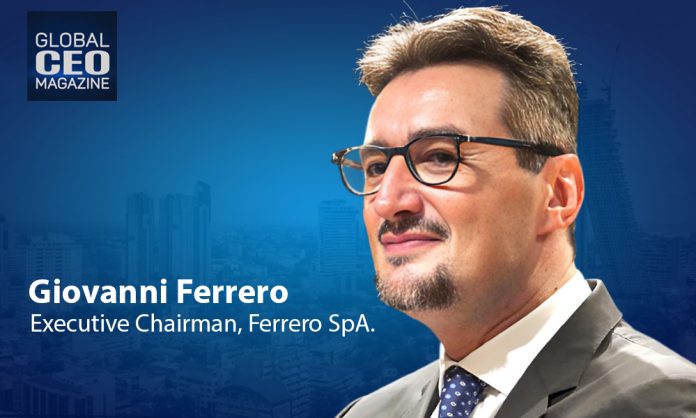
In the quiet elegance of European business, where dynasties often recede into tradition, one man has defied the norm—Giovanni Ferrero, the Italian billionaire at the helm of the famed Ferrero Group.
In July 2025, his company made headlines by acquiring WK Kellogg, the iconic American cereal company behind Froot Loops and Corn Flakes, in a monumental $3.1 billion deal. This move not only marked one of the largest acquisitions in the global food industry this year but also cemented Ferrero’s status as one of the most influential figures in global consumer goods.
According to Forbes, Giovanni Ferrero’s personal fortune was estimated at $43.8 billion in 2024, making him the 26th richest person in the world and the wealthiest in Italy.
Ferrero’s rise, however, has been anything but ostentatious. A man of refined discretion, Giovanni Ferrero prefers Brussels to Milan and strategy meetings to the spotlight. Yet under his stewardship, Ferrero has transformed from a beloved confectionery company—best known for Nutella, Kinder, and Ferrero Rocher—into a global food powerhouse with ambitions that now firmly include breakfast tables across North America.
Since assuming sole leadership of the family business following the deaths of his brother Pietro in 2011 and his father Michele in 2015, Ferrero has pursued a quietly aggressive acquisition strategy. In just a decade, the company has acquired no fewer than 21 firms in nine countries, spending more than $13 billion. Among these were Nestlé’s U.S. candy business for $2.8 billion in 2018 and Kellogg’s cookie and fruit snack division in 2019 for $1.3 billion.
The acquisition of WK Kellogg, which brought in $2.7 billion in revenue in 2024 alone, promises to increase Ferrero’s group revenue by over 10%, boosting its global stature and deepening its roots in the competitive U.S. market. With this move, Ferrero has strategically positioned itself beyond its traditional confectionery base, entering the high-volume, high-stability cereal market—a segment estimated to generate $12 billion annually in North America alone.
Under Giovanni’s leadership, Ferrero’s annual revenue has nearly doubled, from $10.3 billion in 2015 to $20.4 billion in 2024. EBITDA has also seen a significant leap from $1.6 billion to $3 billion in the same period. Today, Giovanni Ferrero, who owns 75% of the company, is worth an estimated $41.2 billion, making him the wealthiest individual in Italy and the sixth richest person in Europe.
Ferrero’s remarkable trajectory began in the modest town of Alba in northern Italy, where his grandfather, Pietro Ferrero, founded the company in 1946. The Ferrero legacy was shaped through quality, innovation, and a distinctly Italian approach to indulgence. But Giovanni’s tenure has added a new dimension—global ambition tempered by meticulous execution.
Educated in Belgium and the United States, Giovanni brings both European finesse and American pragmatism to the boardroom. After a quiet start managing in-house growth with his brother, the sudden responsibility of sole leadership spurred him into action. He reorganised company ownership, formed CTH Invest in Belgium for acquisitions, and began a deliberate campaign of external expansion. In a pivotal shift in 2017, he appointed Lapo Civiletti—the first non-family member—as CEO, choosing to focus on long-term strategy as Executive Chairman.
This separation of roles has worked seamlessly. While Civiletti manages operations, Giovanni continues to shape Ferrero’s strategic future. Together, they have expanded the firm’s product range, geographic reach, and supply chain depth. They have also been attuned to geopolitical risks, with the company investing in diversified hazelnut sourcing, including research initiatives in Oregon and partnerships in Argentina, Chile, Turkey, and Italy.
Nonetheless, challenges loom. Tariff threats from the United States—especially those involving Mexico, Canada, and Brazil—could affect supply chains and profit margins. Additionally, growing scrutiny over artificial food dyes used in processed foods may prompt reformulations, particularly in the U.S. market, where Ferrero faces heightened regulatory and consumer expectations.
Yet Ferrero remains unfazed. His strategy is one of evolution, not revolution. “We are duty-bound to grow,” he once told Forbes in a rare interview at the company’s original factory in Alba. He espoused a disciplined growth model targeting 7.33% annually—a rate that would double the company in a decade. Remarkably, Ferrero is on track to exceed that target, having already achieved 84% growth from 2017 to 2024.
Analysts view the WK Kellogg acquisition as a masterstroke. It adds stable cash flow, broadens product diversity, and enhances Ferrero’s negotiating position with retailers. Moreover, it places the company in close competition with titans like Mars and Mondelez. While Mars is waiting regulatory clearance for its own $36 billion acquisition of Kellanova, Ferrero is quietly gaining ground with strategic precision.
Perhaps what sets Giovanni Ferrero apart most is his unwavering commitment to balance—between growth and heritage, innovation and stability, discretion and dominance. In a fragmented $620 billion global confectionery and food market, Ferrero has carved out a larger slice of the pie with grace and grit.
From the rolling hills of Alba to supermarket shelves across the Atlantic, Giovanni Ferrero’s journey is a testament to what can be achieved when vision meets patience, and tradition embraces change. In an age of flash and noise, Ferrero’s quiet ascent speaks volumes.
References:
1. Tognini, G. (2025, July 11). Meet The Italian Billionaire Behind Ferrero’s $3.1 Billion Deal For Kellogg. Forbes. https://www.forbes.com
2. Morningstar Analyst Commentary on Ferrero-WK Kellogg Deal, July 2025
3. Statista (2024). Global Confectionery Market Data and Projections.
4. The George Institute for Global Health. (2025). Study on Synthetic Dyes in Processed Foods in the U.S.
5. Ferrero Group Official Website – Corporate History and Newsroom
6. Kellanova and Mars Merger Developments (Bloomberg, 2025)
