
As Sri Lanka continues to strengthen its professional and educational landscape, the Association of Accounting Technicians of Sri Lanka (AAT Sri Lanka) stands as a leading force in nurturing competent, ethical, and industry-ready accounting professionals. Since its establishment, AAT has upheld a proud legacy of promoting practical learning, professional integrity, and employability — attributes that have made it a cornerstone of the nation’s accounting fraternity.
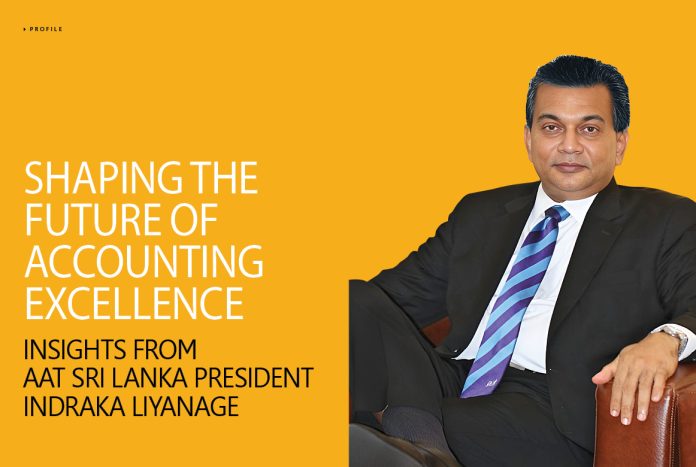
Guiding this mission today is Mr Indraka Liyanage, the President of AAT Sri Lanka and the Regional Risk Head for Sri Lanka and the Maldives at Habib Bank. With his extensive experience in finance and risk management, Mr Liyanage brings a pragmatic, future-focused perspective to AAT’s strategic vision.
In this exclusive interview with Global CEO Magazine, Mr Liyanage discusses AAT’s evolving role in professional education, its contributions to national development, and his aspirations for the next chapter of Sri Lanka’s accounting profession.
Mr Liyanage, how has this year been for AAT Sri Lanka? Have there been any significant achievements or milestones that you would like to highlight?
A: Yes, the preceding period has been truly transformative years for AAT Sri Lanka. We have continued to strengthen our position as the leading professional accounting qualification for middle-level finance professionals in the country. One of our key achievements has been the successful roll out of our revised curriculum, designed to align with global accounting standards and emerging industry needs such as digital finance, data analytics, and sustainability reporting.
We also made significant progress in digitising our examination and student management systems, enhancing convenience, transparency, and accessibility to our growing student community across Sri Lanka and overseas. Another milestone was the expansion of strategic partnerships with universities, professional bodies, and corporate institutions — opening up new pathways for AAT students to pursuing higher education and professional advancement.
Furthermore, our membership base continued to grow, reflecting the increasing recognition of AAT-qualified professionals in both the public and private sectors. We also placed a strong emphasis on regional engagement and inclusivity, bringing more opportunities for students in rural areas through outreach programmes, online learning assistance, and career guidance initiatives.
Overall, recent years have been the years of growth, modernisation, and impact — reinforcing AAT Sri Lanka’s commitment to empowering the next generation of accounting and finance professionals. In addition, we have won many awards during the period including the gold awards at the National Business Excellence Awards conducted by the National Chamber. We were also able to secure a Gold Award at the TAGS Awards conducted by the Chartered Institute of Accountants too.
For readers who may not be fully familiar with the AAT Sri Lanka, could you tell us a bit about how the institute operates, the scale of its student and member base, and the types of educational or professional development activities you offer?
A: AAT Sri Lanka, or the Association of Accounting Technicians of Sri Lanka, is a premier professional body that has been shaping competent and ethical accounting professionals for nearly four decades. Established in 1987 under the patronage of the Institute of Chartered Accountants of Sri Lanka (CA Sri Lanka), the AAT has become a cornerstone in producing skilled accounting technicians who serve across all sectors of the economy. The AAT qualification is recognised in both public and private sectors and is the most affortable professional quailification in Sri Lanka at present. Our reach is across the island and we conduct the examination in 23 centres across Sri Lanka.
Today, we proudly have served a vibrant community of over 450,000 students and more than 8,000 members spread across the country and abroad. Our past finalists thus far exceed 54,000 diploma holders. Our qualification pathway provides an accessible yet rigorous route into the accounting and finance profession, particularly for youth seeking a solid foundation for career advancement or further professional studies.
The AAT operates through a network of accredited training and education providers, ensuring high academic standards and quality assurance. We also conduct national-level examinations, supported by modernised digital systems that enhance convenience and transparency. Beyond qualifications, we are deeply committed to continuous professional development (CPD) — offering seminars, workshops, and online learning sessions that keep our members abreast of evolving trends such as digital transformation, sustainability reporting, and business analytics.
In addition, AAT Sri Lanka actively engages with employers, universities, and international accounting bodies to expand learning pathways and strengthen the professional mobility of our graduates. Our focus is not only on technical excellence but also on nurturing professionals who are ethical, adaptable, and ready to contribute meaningfully to the business community both locally and globally. We are a full member of IFAC, the global body for accountants, and we are the only AAT institute to have obtained that recognition other than AAT UK. In addition, we are also a full member of CAPA, the global body for accounting professionals in Asia Pacific.
AAT Sri Lanka has played a vital role in shaping accounting and finance professionals over the years. How do you see the institute’s contribution to national human capital development and employability in the financial sector?
A: AAT Sri Lanka has long been a cornerstone in developing the nation’s accounting and finance talent. Our mission has always been to bridge the gap between education and employability — ensuring that young people across Sri Lanka have access to professional qualifications that are both affordable and industry-relevant. In this regard, the AAT has played a pivotal role in broadening the base of skilled human capital that fuels the public and private sectors alike. Since our members carry practical experience, employers prefer to hire the AAT qualified individuals. We hardly observe any unemployed AAT members other than those who do voluntarily.
Over the years, our graduates have become an integral part of the country’s financial ecosystem — serving in roles that span accounting, auditing, banking, taxation, and business management. Many of them have gone on to pursue higher qualifications and leadership positions, both locally and internationally. This clearly demonstrates how the AAT qualification acts as a launchpad for upward professional mobility.
What makes our contribution truly impactful is our focus on practical competence and ethics. Our training model combines technical knowledge with hands-on experience, producing professionals who can immediately add value in the workplace. Through continuous curriculum updates, digital learning initiatives, and collaboration with employers and universities, we ensure that our students and members remain aligned with emerging global trends in finance and technology.
Ultimately, AAT Sri Lanka’s contribution goes beyond producing accounting technicians — we are building a skilled, ethical, and future-ready workforce that strengthens national productivity and contributes to sustainable economic growth. We take great pride in being a trusted partner in Sri Lanka’s human capital development journey.
Are you satisfied with the current direction and operations of the institute? Looking ahead, what specific plans or strategic initiatives do you have in mind for the coming years?
A: Yes, I am very satisfied with the current trajectory of AAT Sri Lanka. Over the past few years, the institute has undergone a period of significant transformation — modernising its systems, updating its curriculum, and strengthening its relationships with key stakeholders in education, industry, and government. These developments have positioned AAT Sri Lanka as a dynamic, future-ready professional body that continues to make a strong national impact.
However, satisfaction does not mean complacency. As we look ahead, our focus is on strategic growth, innovation, and global relevance. We have several key initiatives planned for the coming years. First, we are committed to further digital transformation — enhancing our online learning platforms, examination processes, and member services to create a seamless and accessible experience for all stakeholders. We have negotiated with a global partner, for strategising to take our qualification to international level.
Second, we are expanding our international partnerships and recognition pathways, enabling the AAT graduates to pursue global career opportunities and advanced professional qualifications with greater ease. At the same time, we will continue to strengthen industry linkages within Sri Lanka to ensure our qualification remains closely aligned with evolving employer needs.
Another important area is youth empowerment and regional inclusivity. We want to ensure that talented students from all parts of the country — including rural and underserved areas — have access to professional education and clear pathways for career development.
Finally, we are investing in thought leadership and sustainability initiatives, reinforcing AAT Sri Lanka’s role as a catalyst for ethical, innovative, and socially responsible financial professionals.
In short, while we take pride in how far we have come, our vision for the years ahead is one of continued progress — to make AAT Sri Lanka not only a national leader in accounting education but also a globally respected partner in human capital development.
Technology and digital transformation are reshaping the accounting profession globally. How is the AAT adapting to these changes — both in curriculum development and in preparing students for future employability skills?
A: The accounting profession is undergoing a profound transformation driven by digitalisation, automation, and data-driven decision-making. At AAT Sri Lanka, we recognise that preparing our students and members for this evolving landscape is not optional — it is essential. Our strategic direction has, therefore, placed digital competency and future-readiness at the heart of our educational and professional development initiatives.
In terms of curriculum development, we have integrated key digital and technological competencies into our latest syllabus revision. This includes areas such as accounting software applications, data analytics, digital finance, cybersecurity awareness, and sustainability reporting — ensuring our graduates are equipped with both technical and analytical skills demanded by modern workplaces. We’ve also enhanced our focus on critical thinking, communication, and problem-solving to complement technological literacy.
Beyond curriculum reform, AAT Sri Lanka has embraced digital transformation across its operations. Our examinations, student services, and learning resources are increasingly accessible through online platforms, making professional education more flexible and inclusive. This not only supports a new generation of tech-savvy learners but also ensures that our members remain resilient and adaptable amid rapid technological change.
We are also actively collaborating with employers, universities, and global accounting bodies to align our programmes with emerging industry standards and future job roles. Through continuous professional development (CPD) programmes, webinars, and digital learning modules, we help our members stay current with global best practices and innovations shaping the profession.
In essence, AAT Sri Lanka is not merely adapting to digital transformation — we are leading the change by cultivating a new generation of accounting professionals who are digitally fluent, ethically grounded, and ready to contribute to the future of business in a connected, technology-driven world.
The strength of any professional body lies in its partnerships and collaborations. Has the AAT formed any new alliances, either locally or internationally, to enhance opportunities for students and members?
A: Absolutely. At AAT Sri Lanka, we firmly believe that collaboration is central to progress. Over the years — and particularly in our recent strategic phase — we have prioritised forming strong local and international partnerships to expand learning pathways, enhance global recognition, and create new opportunities for our students and members.
On the local front, we have strengthened relationships with universities, professional institutes, and industry associations to ensure smoother academic progression and better employability outcomes. Such institutes include, our parent Chartered Institute of Sri Lanka and pioneer post-graduate institutes such as PIM Sri Lanka, Chartered Institute of Secretaries, and many local and foreign Universities, to name a few. These collaborations allow our students to receive credit transfers, pursue degree programmes, and gain practical exposure through structured internship and training arrangements. We have also worked closely with corporate and public sector employers to align our qualification with real-world workplace demands, ensuring that AAT graduates remain highly sought-after.
Internationally, we have made significant strides by building alliances with globally recognised professional accounting bodies. These partnerships provide our members with clear progression routes to higher professional qualifications and international career mobility. Additionally, our growing engagement with regional accounting organisations and development partners supports knowledge-sharing, digital transformation initiatives, and the adoption of international best practices in education and governance.
Through these partnerships, AAT Sri Lanka continues to strengthen its role as a gateway to global opportunities — ensuring that our qualification remains relevant, respected, and responsive to the evolving needs of the accounting profession worldwide.
Our vision is to keep expanding these networks, enabling every AAT student and member to benefit from a globally connected, future-ready professional community.
Finally, is there any other important message or initiative you would like to share with our readers — something we may not have covered, but that you believe is vital to the ongoing success of AAT Sri Lanka?
A: Yes. While we’ve discussed many of our key initiatives, I would like to highlight one area that is especially close to our vision: our commitment to empowering the next generation through inclusive and values-driven education. At AAT Sri Lanka, we view our mission not merely as producing accounting professionals, but as nurturing responsible citizens who contribute to the nation’s economic and ethical development.
In recent years, we have placed strong emphasis on youth engagement, ethics, and sustainability. Through our outreach and scholarship programmes, we are creating pathways for talented young people — especially from rural and underserved communities — to access professional education and secure meaningful careers in finance and business. We believe that real progress lies in giving every capable student the opportunity to succeed, regardless of background.
We are also championing ethical leadership and sustainability awareness within our curriculum and professional programmes. The modern accountant is no longer just a number-cruncher; they are a strategic partner in shaping sustainable and transparent business practices. AAT Sri Lanka is deeply committed to instilling these values in all our members.
Finally, I would like to reaffirm our focus on innovation, inclusivity, and integrity as the three pillars that will guide AAT Sri Lanka into the future. With the dedication of our Council, staff, members, and partners — both local and international — we are confident that the AAT will continue to be a driving force in Sri Lanka’s professional and economic advancement.
To our readers, I extend an open invitation to collaborate with us — as employers, educators, or partners — in our shared mission to build a skilled, ethical, and future-ready workforce for the world.
